

Have you ever raised your hands, cried while making dua, asked Allah again and again, and then wondered, “Why is my dua not being answered?”
Maybe you have been praying for marriage, a job, healing, children, financial relief, protection, forgiveness, or a solution to a problem that has been hurting your heart for months or even years.
When nothing seems to change, it is natural to feel discouraged.
But there is something important every believer should remember:
A delayed answer is not the same as a rejected dua.
So when you make a sincere dua, do not assume that Allah has not heard you.
Allah hears you.
The real question is often not, “Did Allah hear my dua?” but rather:
“How is Allah choosing to respond to my dua?”
In this article, we will look at what the Qur’an and authentic hadith teach about delayed duas, unanswered prayers, patience, good deeds, halal earnings, and the different ways Allah may respond to our supplications.
Does Allah Hear Every Dua?
Yes. Allah tells us that He is near and responds to the one who calls upon Him.
Allah says:
“Indeed, I am near. I respond to the invocation of the supplicant when he calls upon Me.”
— Surah Al-Baqarah 2:186
This is one of the most comforting verses about dua.
Notice that Allah does not tell us that He only hears the duas of people who have perfect lives.
He says that He responds to the supplicant who calls upon Him.
Allah also says:
“Call upon Me; I will respond to you.”
Surah Ghafir 40:60
Therefore, a believer should never think:
- “Allah does not hear me.”
- “My dua is useless.”
- “There is no point in asking anymore.”
- “Allah has forgotten me.”
These thoughts can make a person abandon one of the greatest acts of worship: turning to Allah.
Instead, keep asking.

Why Does It Feel Like My Dua Is Not Being Answered?
When my prayers feel unanswered, it is usually because I am looking for a specific outcome on my own timeline. I trust that Allah’s response is guided by wisdom and knowledge that far exceed my limited vision.
Allah knows what we cannot see.
The Qur’an reminds us:
“Allah knows, and you do not know.”
Surah Al-Baqarah 2:216
This verse is especially relevant when we desperately want something.We may love something because we can only see its benefits.Allah knows its consequences.
The Hadith That Changes How We Look at Dua
One of the most important teachings about dua comes from a narration attributed to Abu Sa’id al-Khudri (RA).
The Prophet Muhammad ﷺ taught that a Muslim’s supplication is not wasted when it contains nothing sinful and does not involve cutting family ties.
Allah may:
- Grant the dua quickly.
- Store its reward for the Hereafter.
- Remove from the person an equivalent amount of harm.
When the companions heard this, they said they would make many supplications.
The Prophet ﷺ replied that Allah has even more to give.
This hadith completely changes the way we can understand an apparently unanswered dua.Your dua does not simply disappear because you did not receive exactly what you requested.
There may be an answer that you cannot see yet.
Your Dua Is Never a Waste
Imagine making dua for something for five years.You never receive exactly what you asked for.It would be easy to think that those five years of dua were wasted.
But according to the hadith, that conclusion is not correct.
Your supplication may have:
- brought you something sooner than you realized,
- protected you from harm,
- had its reward stored for the Hereafter,
- changed circumstances in ways you never noticed,
- strengthened your relationship with Allah,
- or become part of your record of worship.
This is why I personally find it much more encouraging to think:
“Every dua has its own account with Allah.”
I do not want to stop making dua simply because I cannot see the answer.
Four Ways I Personally Understand the Acceptance of Dua
When I make dua, I try to remind myself that turning to Allah is never in vain. Over time, reflecting on Islamic teachings has completely shifted how I view answered and unanswered prayers. I personally understand Allah’s response to my supplications in four distinct ways:
1. Allah May Give You Exactly What You Asked For
Sometimes, Allah grants me the exact thing I asked for, right when I need it—whether it is a job, healing from an illness, or a sudden solution to a difficult problem.
2. Allah May Give It to You Later
Other times, the answer takes time. I realize that I often ask out of haste, but Allah’s timing is based on wisdom I cannot see. A delay allows me to grow, gain patience, and receive the blessing when I am truly ready for it.
The Prophet ﷺ warned believers against becoming impatient with dua.
He said that a person’s supplication continues to be responded to as long as the person does not become impatient and say, “I supplicated, but my supplication was not answered.”
3. Allah May Give You Something Better
This is one of the most beautiful possibilities.You may ask Allah for one particular thing while Allah knows that something else is better for you.
Perhaps you ask for one person, but Allah protects you from that relationship.
Perhaps you ask for one job, but Allah later gives you a better career.
Perhaps you ask for one opportunity, but Allah closes that door and opens another.
Perhaps you ask for something because you believe it will make you happy, while Allah knows that it could harm your faith, family, future, or peace.
4. Your Dua May Be Preserved for the Hereafter
This is especially powerful.
Sometimes we may never see the worldly answer.But that does not mean the dua was ignored.The authentic narration says that a person’s supplication may be stored for him in the Hereafter.
This gives dua a completely different meaning.You are not simply asking for something in this world.You are also turning toward your Creator.You are showing dependence upon Allah.
You are worshipping Him through supplication.Personally, this is one reason I find it encouraging to make dua frequently.
I do not want to measure the value of my dua only by what I can see in this world.I want to believe that every sincere dua has been counted.Every request has been heard.Every tear is known to Allah.And every sincere act of turning toward Him has value.
Does Every Dua Get Answered?
We should be precise with our wording.
The Qur’an tells us that Allah responds to the supplicant, and the authentic hadith explains different forms that response can take.
Therefore, “answered” does not necessarily mean:
“I received exactly what I requested, exactly when I wanted it.”
Sometimes the response is different from our expectation.
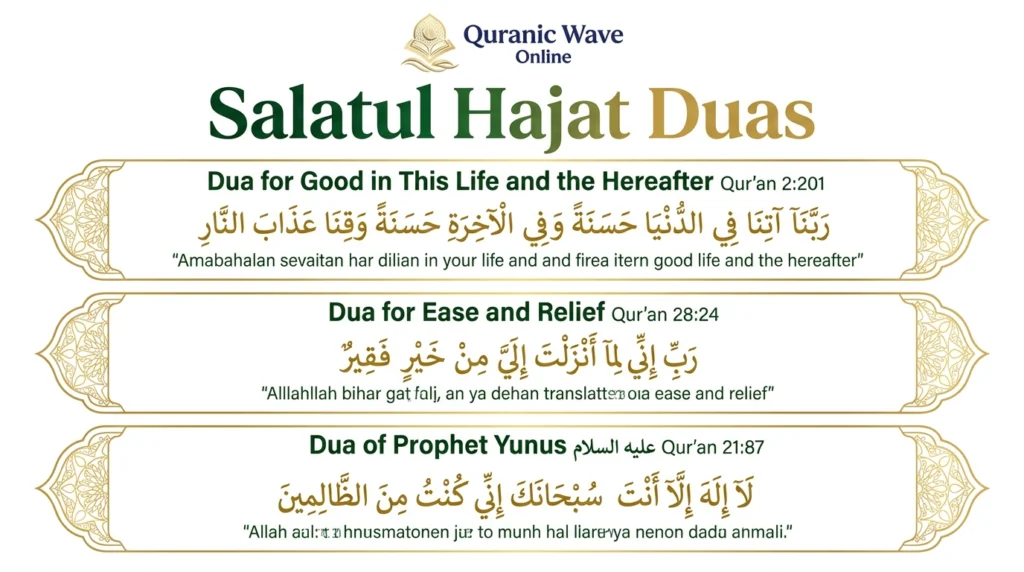
Focused on turning to Allah through specific prayers
When you feel overwhelmed while waiting for an answer, turning to special prayers like Salatul Hajat can help you present your needs with full sincerity. You can also enrich your supplications by reciting the 40 Rabbana duas from the Quran, which offer powerful words directly revealed by Allah to guide our requests.
Why Should We Keep Making Dua?
Because dua itself is an act of worship.
When you make dua, you acknowledge that Allah is your Creator and that you need Him.You are not relying completely upon yourself.You are turning toward the One who controls what you cannot control.
What If I Have Been Making Dua for Years?
This can be one of the hardest situations.
You may think:
“I have asked Allah for this for years. Why has nothing changed?”
Instead of counting only the days you have waited, think about the fact that you have spent those days turning toward Allah.Your dua has not become meaningless simply because the calendar moved forward.
Sometimes the greatest test is not the problem itself.It is whether we continue trusting Allah while living through the problem.
Are There Reasons a Dua May Not Be Accepted?
Islam also teaches us to examine ourselves.We should not use “Allah knows best” as an excuse to ignore our own mistakes.
One major warning appears in Sahih Muslim.
The Prophet ﷺ described a person who was traveling, disheveled and raising his hands in supplication, but his food, drink, clothing, and nourishment were unlawful. The Prophet ﷺ then explained how this person’s unlawful consumption affects the acceptance of his supplication.
This gives us an important opportunity for self-reflection.
Ask yourself:
- Am I earning halal income?
- Am I consuming haram wealth?
- Am I deliberately committing sins without repentance?
- Am I harming other people?
- Am I breaking family ties?
- Am I asking Allah for something sinful?
- Am I becoming impatient with Allah’s timing?
- Am I remembering Allah only when I need something?
These questions should not make us despair.
They should make us improve.
Does Sin Mean Allah Will Never Answer My Dua?
No.
We should not make sweeping claims such as:
“You have sins, so Allah will never answer your dua.”
Every human being sins.The correct response to sin is repentance.Allah tells believers to return to Him.Therefore, if you realize that something in your life needs correction, use that realization as motivation.
Make tawbah.
Fix what you can.
Return people’s rights.
Seek halal income.
Repair broken relationships where appropriate.
Then keep making dua.
What Does Patience in Dua Really Mean?
Patience does not mean sitting back and doing nothing.
-
I combine my prayers with active effort: I know patience does not mean sitting back and doing nothing while waiting for a response.
-
I take the necessary steps: If I am asking Allah for a job, I apply for opportunities; if I ask for healing, I seek appropriate medical treatment; if I ask for financial relief or marriage, I pursue halal, responsible means.
-
I seek success after taking action: Once I have put in the work, I ask Allah to bless the effort and grant me success.
-
I balance effort and reliance: I understand that dua is not a replacement for taking action, and my effort is not a replacement for my complete dependence on Allah—I strive to practice both in my daily life.
My Personal Dua Routine
One reason I personally find dua so powerful is that I do not want to treat it as something that only matters when I see an immediate result.
My routine is built around consistency.
I try to make dua:
- After my obligatory prayers.
- During moments when I feel grateful.
- When I am worried or uncertain.
- For my family and loved ones.
- For my worldly needs.
- For forgiveness and guidance.
- For my future and the Hereafter.
- For things I may not even know I need.
I also try to make dua regularly rather than waiting until life becomes extremely difficult.This way of thinking has changed how I look at unanswered prayers.
Instead of saying:
“I asked, but nothing happened.”
I try to think:
“I asked Allah, and my dua is with Allah. I may not know yet what He has written for me through it.”
That mindset encourages me to make dua more frequently.
Does a Dua Earn Ten Rewards?
The Qur’an clearly teaches a general principle that a good deed receives ten times its reward:
“Whoever comes with a good deed will have ten times the like thereof…”
Surah Al-An’am 6:160
So there is certainly great reward for righteous deeds.
What we can confidently say is that dua is an act of worship, and the authentic hadith about supplication teaches that a sincere dua is not wasted: Allah may grant it, preserve its reward for the Hereafter, or remove an equivalent harm.

How to Make Dua With More Hope
If you are struggling with the feeling that your dua is not being answered, try changing the way you approach your supplication.
1. Ask Allah Directly
Speak to Allah sincerely.
You do not need complicated words.
Tell Allah what is in your heart.
2. Ask for What Is Good
Ask for what is halal and beneficial.
Do not make dua for sin or for something that involves severing family relationships.
3. Do Not Demand Your Timeline
You can ask Allah urgently without assuming that you know the perfect timing.
Say:
“Ya Allah, I need this, but You know what I do not know.”
4. Keep Asking
Do not abandon dua because you have not yet seen the result.
5. Check Your Halal Earnings
Halal food and income matter.
6. Repent Regularly
If you have made mistakes, return to Allah.
Do not let your sins convince you that you should stop asking.
7. Make Dua for the Hereafter Too
Do not let every dua become about money, marriage, career, possessions, or worldly success.
Ask Allah for:
- forgiveness,
- guidance,
- Jannah,
- protection from Hell,
- a sound heart,
- righteous family,
- beneficial knowledge,
- steadfastness,
- and a good ending.
A Simple Mindset for Unanswered Dua
When you feel discouraged, remember these five sentences:
Allah heard me.
Allah knows what I need.
Allah knows what I do not know.
Allah’s timing is wiser than mine.
My sincere dua is not wasted.
The last point is especially important.
What Should I Say When My Dua Is Delayed?
You can simply say:
“Ya Allah, I trust You. You know what I need better than I do. If what I am asking for is good for me, grant it to me at the best time. If it is not good for me, turn it away and give me something better. And never let me stop turning to You.”
This is not a specific prophetic dua; it is a personal supplication expressing trust in Allah.
You can also make the Quranic supplications taught in the Qur’an and authentic Sunnah.
What If Allah Gives Me Something I Never Asked For?
Sometimes I ask for one specific thing, only to realize later that Allah has blessed me with something far more essential. Whether He grants me inner contentment instead of wealth, protects me from a harmful situation, or uses a trial to bring me closer to Him, I trust that His plans exceed my limited vision. I remind myself that even when an answer doesn’t match my explicit request, Allah always knows what is truly best for my faith and well-being.
A Dua Journal Can Change the Way You See Your Life
One practical habit that can help is keeping a simple dua journal.
Write down:
| Dua | Date Started | What Happened | What I Learned |
|---|---|---|---|
| A personal need | Date | Result or change | Lesson |
| Family dua | Date | Result or change | Lesson |
| Career/financial dua | Date | Result or change | Lesson |
| Dua for guidance | Date | Changes in yourself | Lesson |
Do not use this as a way of “testing” Allah.
Instead, use it to notice blessings that you may otherwise overlook.
Sometimes we remember what we are still waiting for and forget what Allah has already given us.
The Biggest Mistake: Giving Up on Dua
Giving up on dua turns a temporary delay into a permanent loss. I remind myself that supplication is an act of worship in itself, and I never want impatience to rob me of the blessings written for my faith and future.
Frequently Asked Questions About Dua
Is Allah hearing my dua if I do not see an answer?
Yes. Allah says that He is near and responds to the supplicant who calls upon Him. Not seeing an immediate worldly result does not mean Allah has not heard you.
Why does Allah delay answering my dua?
The exact wisdom behind an individual dua is known to Allah. A delay does not necessarily mean rejection. The authentic hadith teaches that a supplication may be answered, stored for the Hereafter, or become a means of removing an equivalent harm.
What does Islam say about giving up on dua?
The Prophet ﷺ warned against becoming impatient and saying that one made dua but did not receive a response. Therefore, believers should continue making dua rather than abandoning it because of delay.
Can sins affect dua?
Yes, certain actions can affect acceptance. In Sahih Muslim, the Prophet ﷺ warned about a person whose food, drink, clothing, and nourishment were unlawful and explained the serious difficulty this creates for acceptance of supplication. This is a reason to pursue halal earnings and repent, not a reason to lose hope.
Should I stop making dua if I have asked for something many times?
No. Repeatedly making permissible dua is not something to abandon simply because the answer has not appeared. The Prophet ﷺ taught believers not to become impatient with supplication.
Does every dua get exactly what a person asks for?
Not necessarily in the exact form or timing expected. The authentic hadith describes different forms of response, including immediate granting, reward stored for the Hereafter, and protection from an equivalent harm.
Does every dua automatically give ten rewards?
Islam teaches that good deeds carry at least ten rewards,this means no supplication is ever lost or unrewarded.Every sincere prayer carries immense value.
What should I do when I feel that Allah is not answering me?
Keep making dua, avoid impatience, examine your actions and earnings, repent from sins, take practical steps toward your goal, and trust Allah’s knowledge and wisdom.
Final Reminder: Never Think Your Dua Is Lost
There may be days when you make dua and nothing appears to change.
Keep going.
There may be nights when you raise your hands with tears and wonder when relief will come.
Keep going.
There may be a dua that you have repeated for months or years.
Keep going.
Your responsibility is not to know the unseen.
Your responsibility is to turn to Allah.
The Qur’an tells us that Allah is near and responds to the one who calls upon Him.And the Prophet ﷺ taught us that a sincere supplication is not simply thrown away when we do not immediately see what we requested.
Personally, this is why I do not want to stop making dua.I believe every sincere dua matters.I believe every dua has its own account with Allah.
Sometimes I may receive exactly what I asked for.Sometimes I may receive it later.Sometimes Allah may guide me toward something better.
And sometimes the reward or benefit of that dua may be waiting for me in a place where I cannot see it yet.
So keep asking.
Keep trusting.
Keep hoping.