
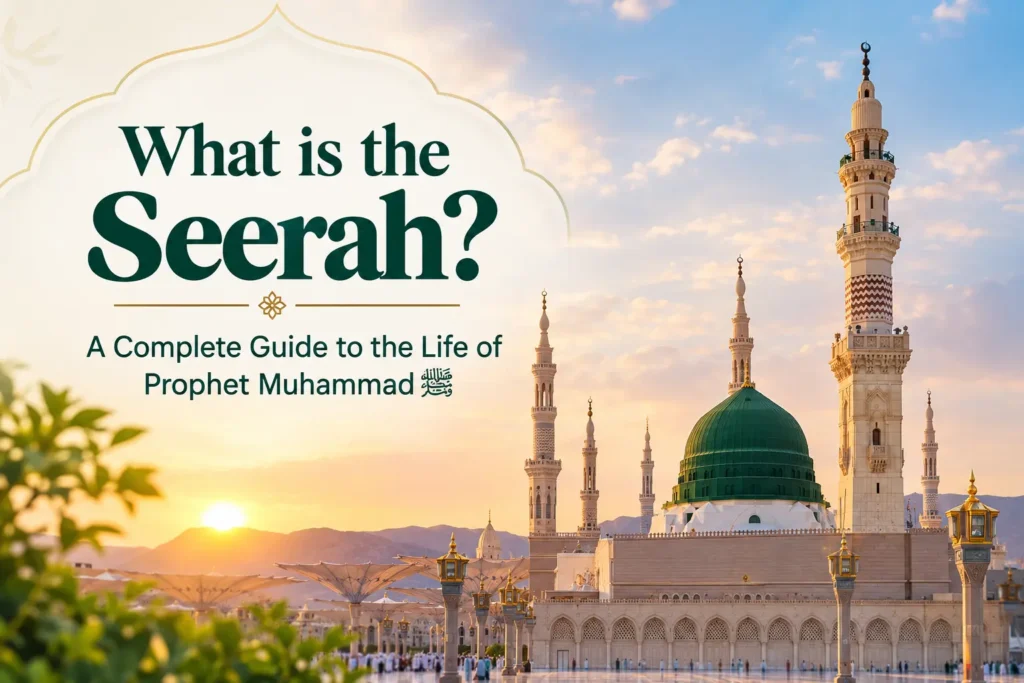
The life of Prophet Muhammad ﷺ is a remarkable story of faith, patience, mercy, and courage that has always deeply inspired me. From facing hardship in Makkah to establishing a community built on justice and brotherhood in Madinah, his journey offers timeless guidance for all of us in every generation. But how can we truly understand his teachings and follow his example in our daily lives?
For me, the answer begins with the Seerah of Prophet Muhammad ﷺ. The Seerah is much more than a historical account; it helps us understand how the Prophet ﷺ lived, worshipped Allah, treated people, and responded to life’s challenges. When we study his life, Islamic teachings come closer to our hearts, showing us practical ways to put them into practice.
Before diving deeper into his mission, you might want to explore Who Is the Greatest Man in Human History? The Timeless Legacy of Prophet Muhammad ﷺ to understand the true scope of his impact.
What Is the Seerah in Islam?
The word Seerah (Sirah) refers to a person’s life story, conduct, and journey. In Islam, it commonly refers to the biography of Prophet Muhammad ﷺ, including his birth, childhood, prophethood, struggles, migration, and final years.
The Seerah draws on the Quran, authentic Hadith, and early historical accounts to explain the events of his life. While the Quran provides the central guidance, Seerah helps readers understand the circumstances surrounding important events and the practical application of Islamic teachings.
Allah says in the Quran:
“Indeed, in the Messenger of Allah you have an excellent example for whoever has hope in Allah and the Last Day and remembers Allah often.” (Quran 33:21)
This verse explains why studying the Prophet’s life is essential: Muslims learn not only what Islam teaches but also how its teachings were demonstrated through his actions.
The Life of Prophet Muhammad ﷺ: Major Events
Understanding the main stages of the Prophet’s life provides a foundation for studying the Seerah in greater depth.
1. Birth and Early Life in Makkah
Prophet Muhammad ﷺ was born in Makkah around 570 CE, traditionally known as the Year of the Elephant. His father, Abdullah, died before his birth, and his mother, Aminah, passed away when he was young. He was subsequently cared for by his grandfather, Abdul Muttalib, and later by his uncle, Abu Talib.
Despite growing up without his parents, he became known for his honesty and trustworthy character. Before receiving revelation, he was known as Al-Amin, meaning the trustworthy.
His early life reminds us that difficult beginnings do not prevent a person from developing excellent character and fulfilling a meaningful purpose.
2. The Beginning of Prophethood
At the age of 40, Prophet Muhammad ﷺ received the first revelation through Angel Jibril in the Cave of Hira. The first revealed verses of Surah Al-Alaq began with the command to read (Quran 96:1–5).
He began calling people to worship Allah alone, abandon idolatry, and uphold justice and compassion. His message challenged deeply rooted social practices, and he and his early followers faced persecution.
The early Makkah period teaches patience, sincerity, and courage when standing for the truth.
3. The Hijrah to Madinah
In 622 CE, the Prophet ﷺ migrated from Makkah to Madinah with his companions after years of persecution. This migration, known as the Hijrah, marks the beginning of the Islamic Hijri calendar.
In Madinah, he helped establish a community grounded in faith, mutual responsibility, and social cooperation.
He built the Prophet’s Mosque, strengthened bonds between the Muhajirun (migrants) and Ansar (helpers), and guided the community through significant political and social challenges.
The Hijrah teaches that sometimes meaningful change requires sacrifice, planning, trust in Allah, and a willingness to begin again.
4. The Final Years and His Lasting Legacy
During his final years, the Prophet ﷺ continued teaching Islam, resolving disputes, and strengthening the Muslim community. The Conquest of Makkah in 630 CE was a major turning point. Rather than seeking personal revenge against many former opponents, he demonstrated forgiveness and restraint.
He passed away in Madinah in 632 CE, leaving Muslims the Quran and his example to guide their lives.
Lessons from the Seerah
The Seerah provides practical lessons that can shape our character, relationships, and decisions.
| Lesson | Example from the Prophet’s Life | How to Apply It |
|---|---|---|
| Patience | Enduring persecution in Makkah | Remain steadfast during difficulties. |
| Honesty | His reputation as Al-Amin | Keep promises and speak truthfully. |
| Mercy | Forgiveness at the Conquest of Makkah | Avoid unnecessary resentment and revenge. |
| Humility | His simple lifestyle and service to others | Treat everyone with respect. |
| Trust in Allah | His reliance on Allah during the Hijrah | Combine prayer with responsible action. |
The Prophet ﷺ also emphasized good character, saying:
“The best of you are those who are best in character.” (Sahih al-Bukhari, 3559,6029)
This teaching reminds Muslims that faith should be reflected in everyday behaviour, not only in words or outward acts of worship.
How the Prophet’s Life Guides Us Today
The Seerah remains relevant because human beings still experience family conflicts, financial worries, social injustice, grief, and uncertainty. Although circumstances change, the need for honesty, wisdom, compassion, and faith remains.
The Prophet’s example offers guidance in several areas:
- Family life: Show kindness, listen carefully, and fulfil responsibilities toward family members.
- Work and business: Practise honesty, avoid deception, and honour agreements.
- Community relationships: Help neighbours, support people in need, and avoid harming others.
- Personal struggles: Exercise patience, seek Allah’s help, and take practical steps toward improvement.
- Leadership: Make decisions fairly, consult others, and accept responsibility.
Allah describes the Prophet ﷺ as a mercy to the worlds (Quran 21:107). His example encourages believers to make mercy and fairness part of their daily conduct.
Why the Seerah Is Essential for Modern Life
Modern life often brings distractions, pressure to succeed, and uncertainty about personal values. Studying the Seerah helps Muslims develop a stronger moral foundation and understand how Islamic principles can guide real decisions.
It also deepens love for the Prophet ﷺ by helping readers understand his sacrifices, devotion to Allah, and concern for others. Parents can use Seerah stories to teach children honesty and courage, while adults can reflect on its lessons when facing difficult choices.
To make learning meaningful, choose one event from the Prophet’s life each week. Read about it using reliable sources, identify its central lesson, and apply that lesson to a specific situation. Consistent reflection can make the Seerah a living source of guidance rather than simply a collection of historical facts.
The Seerah: A Timeless Example for Humanity
The life of Prophet Muhammad ﷺ offers lessons that extend beyond any single historical period. His commitment to truth, justice, mercy, and responsibility provides a lasting example of how faith can influence personal character and relationships with others.
Allah says:
“And indeed, you are of a great moral character.” (Quran 68:4)
This verse highlights the importance of the Prophet’s character in understanding his message. Learning about his conduct encourages Muslims to develop integrity, show compassion, and treat others fairly.
Studying the Seerah should therefore lead to more than historical knowledge. It should inspire meaningful changes in how we speak, work, worship, and care for those around us.
Frequently Asked Questions About the Seerah
1. What does Seerah mean in Islam?
Seerah means the biography and life journey of Prophet Muhammad ﷺ. It covers his early life, prophethood, teachings, migration to Madinah, major events, and personal character.
2. Why is the Seerah important for Muslims?
The Seerah helps Muslims understand the Prophet’s example and apply Islamic teachings to everyday life. It provides lessons about worship, patience, honesty, family relationships, leadership, and compassion.
3. What are the main sources of the Seerah?
The main sources include the Quran, authentic Hadith collections, and early Islamic historical and biographical works. Readers should distinguish established reports from weak or disputed narrations.
4. What can children learn from the Seerah?
Children can learn honesty, kindness, patience, courage, respect for parents, and care for others. Age-appropriate stories can help them understand Islamic values through practical examples.
5. How can I start studying the Seerah?
Begin with a reliable biography of Prophet Muhammad ﷺ, study the major events in chronological order, and consult authentic Hadith and Quranic references. Reflect on one lesson at a time and try to apply it in daily life.
Conclusion: Bring the Seerah Into Your Daily Life
The Seerah of Prophet Muhammad ﷺ is a guide to developing stronger faith, better character, and more meaningful relationships. From his early struggles in Makkah to his leadership in Madinah, every stage of his life offers lessons in patience, mercy, courage, and trust in Allah.
Start learning the Seerah today, even if it is just a few minutes each day. Explore reliable Islamic resources, reflect on the Prophet’s teachings, and put one lesson into practice each week.
Visit QuranicWave to explore more Islamic learning resources and strengthen your understanding of the Quran and the life of Prophet Muhammad ﷺ.