
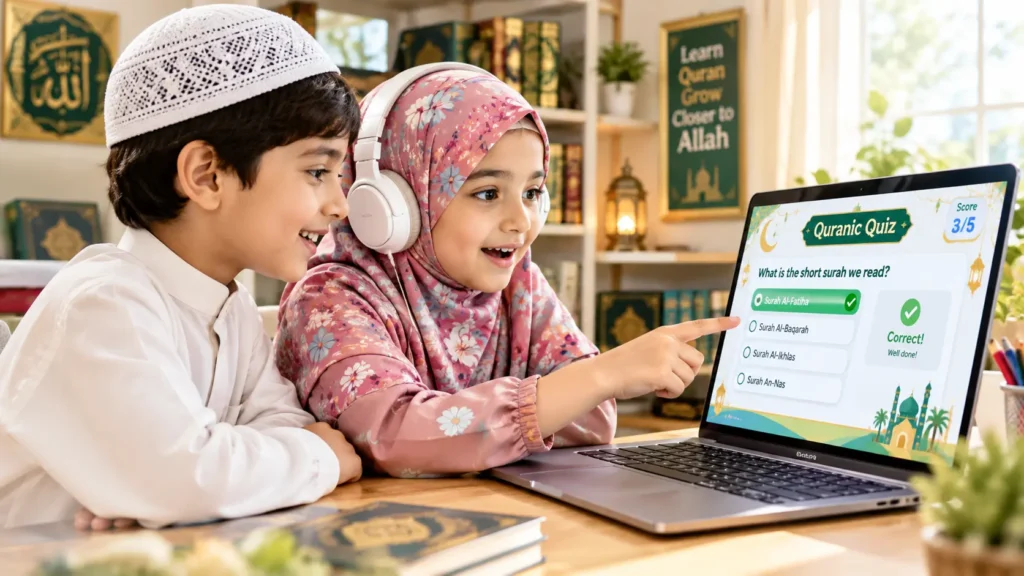
One of the questions parents often ask me as an online Quran teacher is, “What is the right age for my child to start Quran classes?” No single age works perfectly for every child. Some children are ready to learn Arabic letters at four, while others may benefit from starting around five, six, or later.
In my experience teaching children online, readiness matters more than a child’s age. A child who can listen, recognize basic letters, follow simple instructions, and sit for a short lesson may be ready to begin. The goal should be to build a positive relationship with the Quran rather than make early learning feel like a burden.
Best Age for Online Quran Classes for Kids
For many children, ages 4 to 7 can be a suitable period to begin basic Quran learning, particularly Arabic letters, Qaida, pronunciation, and simple Islamic concepts. However, this should be adjusted according to the child’s development and attention span.
A simple guide can look like this:
| Age | Possible Learning Focus |
|---|---|
| 3–4 years | Arabic letters, listening, short Islamic activities |
| 4–5 years | Noorani/Qaida basics, letter recognition, simple duas |
| 5–7 years | Reading practice, pronunciation, basic Tajweed |
| 7–10 years | Quran reading, Tajweed, memorization, Islamic studies |
| 10+ years | Structured Quran reading, Tajweed, memorization and deeper study |
These are general guidelines, not strict rules. A child’s maturity, previous exposure to Arabic, learning needs, and interest should also be considered.
How Do I Know If My Child Is Ready?
Age alone cannot tell you whether your child is prepared for online Quran learning. I usually recommend looking for practical signs of readiness.
Your child may be ready if they can:
- Sit and focus for around 10–20 minutes.
- Listen to and follow simple instructions.
- Recognize some letters or sounds.
- Repeat words or sounds after a teacher.
- Use a tablet or computer with parental assistance.
- Communicate when they need help or a short break.
- Show some curiosity about the Quran or Islamic learning.
A child does not need to know Arabic before starting. Beginner Quran courses are designed to introduce children to Arabic letters and reading step by step.
Why Starting Young Can Be Helpful
Early Quran education can give children time to become familiar with Arabic letters, pronunciation, and regular learning routines.
Young children often learn through repetition, listening, visual recognition, and practice. A patient teacher can use these methods to introduce Quran reading without expecting the child to master everything immediately.
Starting early may also help establish a routine. Instead of treating Quran learning as something that begins only when a child becomes older, parents can gradually make it part of everyday life.
However, early learning should remain age-appropriate. A four-year-old should not necessarily receive the same lesson structure as a nine-year-old.
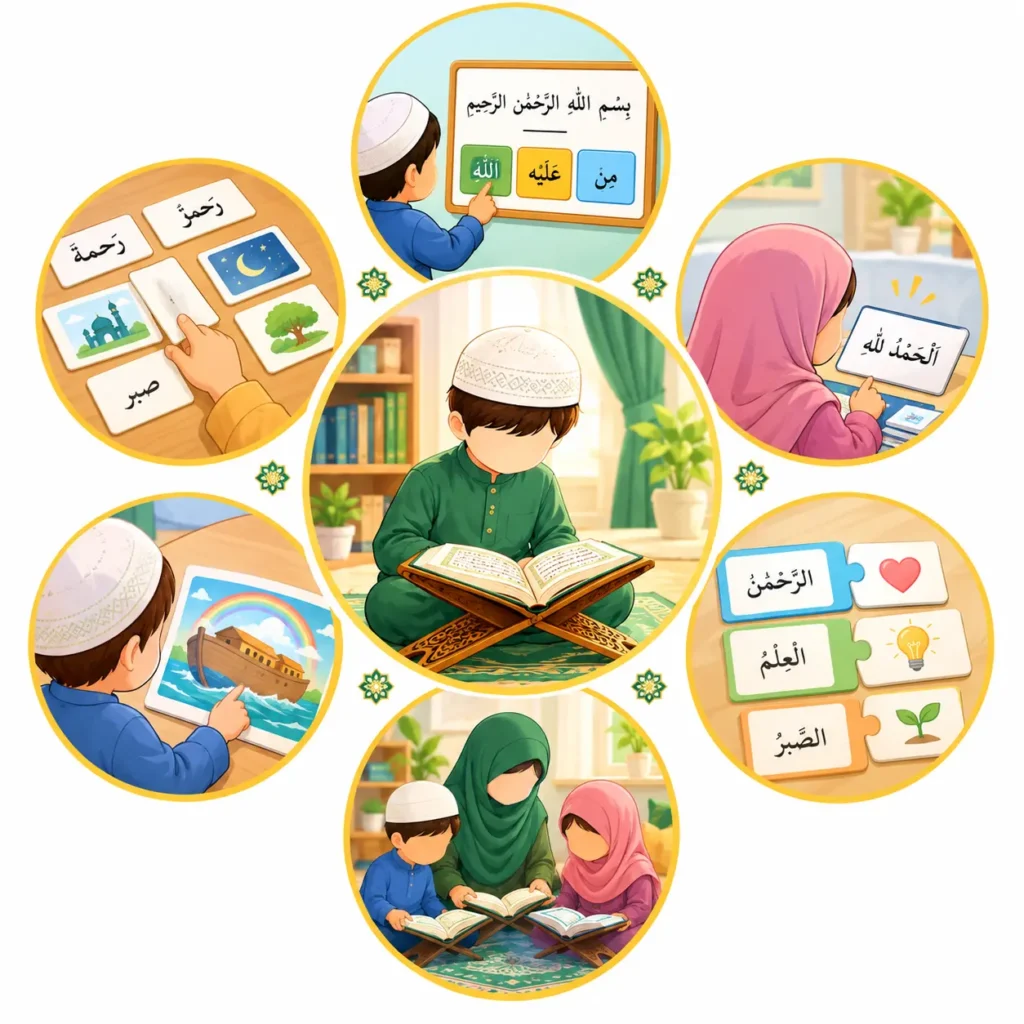
What Should Young Children Learn First?
For beginners, online Quran classes normally work best when lessons progress gradually.
1. Arabic Letters
Children first become familiar with the Arabic alphabet and the shapes and sounds of individual letters.
2. Qaida
A Qaida can introduce basic reading rules and help children move from individual letters toward connected words.
3. Correct Pronunciation
The teacher can gradually correct pronunciation and help the child recognize sounds that may be unfamiliar.
4. Short Quranic Surahs
Once reading skills develop, children can begin practicing short surahs according to their level.
5. Basic Tajweed
Tajweed can be introduced gradually rather than overwhelming a young learner with many rules at once.
How Long Should an Online Quran Lesson Be?
Young children usually need shorter, focused lessons. A long session can become tiring, particularly when the child is still developing concentration skills.
For example:
- Ages 4–5: around 15–20 minutes
- Ages 5–7: around 20–30 minutes
- Older children: around 30–45 minutes, depending on their needs
The exact duration should depend on the child’s attention, learning speed, and course objectives.
As an online teacher, I have found that a focused lesson with active participation can be more useful than simply making a child sit through a lengthy session.
Online Quran Classes vs. In-Person Learning
Online Quran classes can be practical for families who want flexible scheduling and access to teachers from home. Children can learn Quran reading, Qaida, Tajweed, memorization, and Islamic studies through live lessons.
Parents should still consider whether their child is comfortable learning through a screen. Younger children may need an adult nearby, especially during their first few lessons.
When choosing an online Quran program, parents should consider:
- Teacher experience with children
- Lesson structure
- Class duration
- Individual or group teaching
- Progress tracking
- Communication with parents
- Internet and device requirements
- Safety and appropriate teacher-child interaction
How Parents Can Make Quran Learning Easier
Parents have an important role even when a child studies with an online Quran teacher.
Try these simple practices:
- Keep a consistent class schedule.
- Provide a quiet learning space.
- Stay nearby when younger children need assistance.
- Encourage regular revision without excessive pressure.
- Praise effort and improvement.
- Avoid comparing your child with other children.
- Make Quran reading part of the family’s routine.
Consistency is usually more useful than demanding a large amount of work from a young learner.
What If My Child Is Older?
There is no need to worry if your child has not started Quran classes at an early age. Children can begin learning at many different stages.
An older beginner may progress quickly because they can understand instructions, maintain concentration, and practice independently. What matters most is creating a realistic learning plan and maintaining regular practice.
The important thing is not to make a child feel embarrassed about starting late. Quran learning should remain a welcoming and meaningful experience.
My Personal Experience: Age Is Never a Barrier to Learning
Throughout my years of teaching online Quran classes, I have worked with students across a wide range of ages and capabilities. If there is one primary takeaway from my journey, it is that age does not define a child’s capacity to learn—every stage brings its own unique strengths and learning dynamics.
Teaching Toddlers (Ages 3 to 3.5)
Teaching very young learners has been one of the most rewarding aspects of my work. At 3 to 3.5 years old, many children arrive already familiar with basic Kalmas or short Surahs that they practiced at home with their mothers.
Having that early exposure makes it remarkably smooth to transition them into structured learning, starting from basic Qaida practice.
With a gentle, interactive, and patient approach, these young minds adapt surprisingly well and build a joyful relationship with Quranic learning from the very beginning.
The Core Beginner Group (Ages 4 to 6)
The majority of my students join around ages 4 to 6. At this stage, children are naturally curious, quick to absorb new sounds, and ready to establish steady study habits. They quickly adapt to letter recognition, correct pronunciation, and basic Tajweed rules when guided step by step.
Older Beginners & Young Teens (Ages 10 to 14)
I have also taught older students, including girls aged 10 to 14, who started their Quranic journey later and had not yet completed reading the Quran. What stood out most with this group was how rapidly they progressed, *Alhamdulillah*. Because of their developed focus, maturity, and ability to follow instructions independently, they grasped concepts quickly and made fast, meaningful progress.
My Key Conclusion
Every age group possesses a different capacity and style of learning, but age itself is never a barrier. Whether a student is a 3-year-old taking their very first steps or a teenager advancing at an accelerated pace, success ultimately comes down to consistency, readiness, and tailored guidance.
Frequently Asked Questions
What is the best age to start online Quran classes?
Many children can begin basic Quran learning around ages 4 to 7, but readiness varies. Parents should consider attention span, communication, maturity, and interest rather than age alone.
Can a 4-year-old learn the Quran online?
Yes, some four-year-olds can begin online Quran learning. Lessons should be short, interactive, and focused on age-appropriate skills such as Arabic letters, listening, and basic Qaida work.
How long should a child’s Quran class be?
Younger children often benefit from approximately 15–30 minute lessons, while older children may be comfortable with longer sessions. The teacher should adjust the duration according to the child’s ability to concentrate.
Is it too late to start Quran classes at age 8 or 10?
No. Children can begin Quran learning at different ages. An older beginner can start with the appropriate level and gradually develop reading, Tajweed, and memorization skills.
Should parents force children to attend Quran classes?
Parents should encourage regular learning while avoiding unnecessary pressure. A supportive environment can help children develop a positive attitude toward Quran education.
Final Thoughts
From my experience teaching Quran online, I believe the right starting age is simply when your child can learn comfortably, participate willingly, and receive appropriate guidance.
For many children, the preschool and early school years are a wonderful starting point, but there is no rigid deadline.
If you are considering online Quran classes for your child, I invite you to evaluate their readiness and take the first step with us. At QuranicWave , we are dedicated to providing a patient, age-appropriate, and engaging learning experience tailored to every child’s unique pace.
Welcome to join QuranicWave! Together, through patience, consistency, and encouragement, we can make Quran learning a beautiful and meaningful part of your child’s life. Explore our online Quran programs today and choose a learning routine that best suits your family.