
When I first started looking closely at how I practice my faith, I realized that understanding Tawheed isn’t just about knowing the basics—it’s about protecting my heart from the subtle things that quietly slip in.
While most of us easily recognize major acts of disobedience, I often found myself wondering: could everyday habits, fleeting thoughts of seeking praise, or casual remarks carry forms of hidden shirk?
Let’s explore what major and minor shirk really mean, how hidden shirk shows up in our daily routines, and how we can safeguard our faith with sincerity and peace of mind.
Allah says in the Quran:
“Indeed, Allah does not forgive association with Him, but He forgives what is less than that for whom He wills.” (Quran 4:48)
This warning highlights the seriousness of shirk and the importance of sincere repentance.
What Is Shirk in Islam?
Shirk means associating partners with Allah in His divinity, worship, or attributes that belong exclusively to Him. It contradicts Tawheed, which teaches Muslims to direct their worship and ultimate devotion to Allah alone.
Shirk is commonly discussed in two categories: major shirk and minor shirk. Recognizing the difference is essential because they differ in seriousness and consequences.
The Prophet Muhammad ﷺ said:
“Whoever dies while calling upon a partner besides Allah will enter the Fire.” (Sahih al-Bukhari 4497)
This hadith emphasizes the gravity of major shirk and the need to worship Allah alone.
Major vs. Minor Shirk: What Is the Difference?
1. What Is Major Shirk (Shirk Akbar)?
Major shirk means directing an act of worship to someone or something besides Allah, or believing that another being shares Allah’s exclusive right to worship.
Examples include:
- Praying to a deceased person or a deity besides Allah.
- Offering sacrifices as an act of worship to someone other than Allah.
- Believing that another being independently possesses divine power or deserves worship.
- Seeking supernatural help from another being in a way that attributes divine powers to it.
Major shirk contradicts the foundation of Islamic faith. If a person dies without repenting from it, the Quran warns of its severe consequences.
Allah says:
“Indeed, association with Allah is great injustice.” (Quran 31:13)
2. What Is Minor Shirk (Shirk Asghar)?
Minor shirk refers to actions or words identified in Islamic teachings as shirk but which do not, by themselves, amount to major shirk. It can weaken sincerity and harm a person’s spiritual life.
Common examples include:
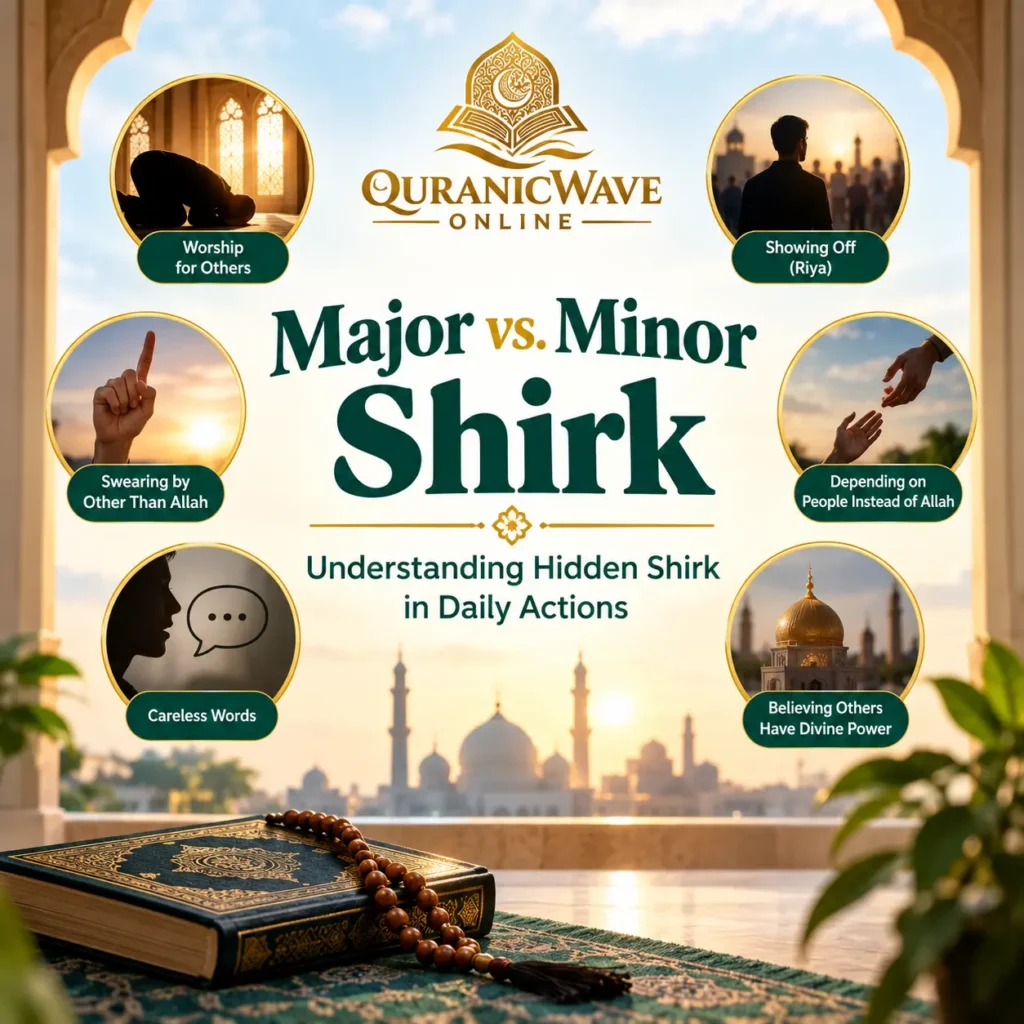
- Showing off in worship (Riya): Performing prayer or giving charity primarily to gain people’s admiration.
- Swearing by something other than Allah: The Prophet ﷺ warned against this practice.
- Certain expressions: Saying “What Allah and you will” when the wording improperly places another person’s will alongside Allah’s, rather than clearly distinguishing the two.
The Prophet ﷺ said:
“What I fear most for you is minor shirk.” When asked what it was, he explained: “Showing off.” (Reported by Ahmad; commonly cited as an authentic narration)
This warning reminds Muslims to examine their intentions and seek sincerity in worship.
Hidden Shirk in Everyday Actions: Examples to Recognize
Hidden shirk is especially important because it may involve intentions that others cannot see. However, not every desire for appreciation or ordinary mistake is shirk. The context, intention, and nature of the action matter.
Showing Off During Prayer or Charity
A person may lengthen their prayer when others are watching or donate money mainly to receive praise. If worship is performed for people’s admiration, this can involve riya, a form of minor shirk.
Allah says:
“So woe to those who pray, those who are heedless of their prayer, those who make a show of their deeds.”
(Quran 107:4–6)
Practical step: Renew your intention before praying, giving charity, or performing any good deed. Ask yourself whether you would still do it if nobody knew.
Before you read further, I invite you to explore What is Sadaqah? Types, Rewards, Rules, and Invalid Charity in Islam and Why Forgiveness Is the Greatest Gift of Charity in Islam .
Depending on People Instead of Allah
Seeking help from people through ordinary, lawful means is not shirk. Islam encourages cooperation and responsible action. The concern arises when someone attributes divine powers to creation or directs worship to another besides Allah.
The Prophet ﷺ said:
“When you ask, ask Allah; when you seek help, seek help from Allah.” (Jami’ at-Tirmidhi 2516)
Practical step: Make dua to Allah, trust Him, and use the lawful means available to you.
Using Careless Words
Some expressions can unintentionally suggest equality between Allah and His creation. For example, saying “What Allah and you will” should be replaced with “What Allah wills, then what you will.”
The Prophet ﷺ taught a companion not to say, “What Allah wills and what you will,” but rather, “What Allah wills, then what you will.” (Sunan Abi Dawud 4980)
Practical step: Choose words that affirm Allah’s supreme will while acknowledging human choices appropriately.

How to Protect Yourself From Hidden Shirk
Protecting your faith requires knowledge, sincerity, and balanced self-awareness. Follow these practical steps:
- Strengthen Tawheed: Learn the meaning of worshipping Allah alone.
- Renew your intentions: Before good deeds, remind yourself that you seek Allah’s pleasure.
- Make dua for protection: Ask Allah to keep your heart sincere and your faith firm.
- Avoid careless religious judgments: Do not label yourself or others as committing major shirk without sound knowledge.
- Repent when necessary: If you recognize a genuine mistake, turn to Allah sincerely and correct your actions.
The Prophet ﷺ taught this supplication:
“Allahumma inni a’udhu bika an ushrika bika wa ana a’lam, wa astaghfiruka lima la a’lam.”
Meaning: “O Allah, I seek refuge in You from knowingly associating anything with You, and I seek Your forgiveness for what I do unknowingly.” (Reported by Ahmad)
Regularly seeking Allah’s guidance helps a Muslim remain humble and mindful.
Frequently Asked Questions About Major and Minor Shirk
What is the main difference between major and minor shirk?
Major shirk contradicts the foundation of Tawheed by directing worship to others besides Allah. Minor shirk includes specific actions or expressions identified in Islamic teachings as shirk without necessarily taking a person outside Islam.
Is showing off in prayer considered shirk?
Showing off in worship, known as riya, is identified as minor shirk. However, intrusive thoughts or unwanted feelings of being observed do not automatically mean a person has committed it.
Can minor shirk be forgiven?
Yes. Minor shirk is not automatically unforgivable. Muslims should sincerely repent, seek Allah’s forgiveness, and correct their behavior. Its precise judgment belongs to Allah.
How can I avoid hidden shirk?
Learn authentic Islamic teachings, renew your intentions, avoid religiously inappropriate expressions, make dua for sincerity, and seek guidance from qualified scholars when uncertain.
Final Reminder: Keep Your Faith Rooted in Tawheed
Understanding major vs. minor shirk is not about living in constant fear. It is about building a sincere relationship with Allah, recognizing harmful practices, and correcting mistakes with knowledge and hope.
Start by examining your intentions, improving your daily worship, and asking Allah to protect your heart from both visible and hidden shirk.
Take a moment today to renew your intention and share this guide with someone who wants to strengthen their understanding of Tawheed.