Giving Sadaqah has become a crucial, non-negotiable habit in my life. Time and time again, I have experienced the most magical and wonderful things right after giving charity.
Whether it was removing a sudden problem, finding an unexpected solution to a complex issue, experiencing a surge in wealth, or unlocking a new source of income, I have found that Allah’s promises in the Quran and Hadith regarding Sadaqah come true every single time.
Whether it is sharing a single piece of bread, giving a huge amount of food, or handing over cash, it truly works. But how? It only works when we give it in the exact way prescribed in the Quran and Sunnah; otherwise, all our charity can go to waste.
Understanding the types of Sadaqah, its rewards, and the actions that can destroy its reward helps Muslims give charity in the way Allah loves.
To help you understand the right path, I have gathered all the essential details, rules, and footsteps in this article.
What Is Sadaqah in Islam?
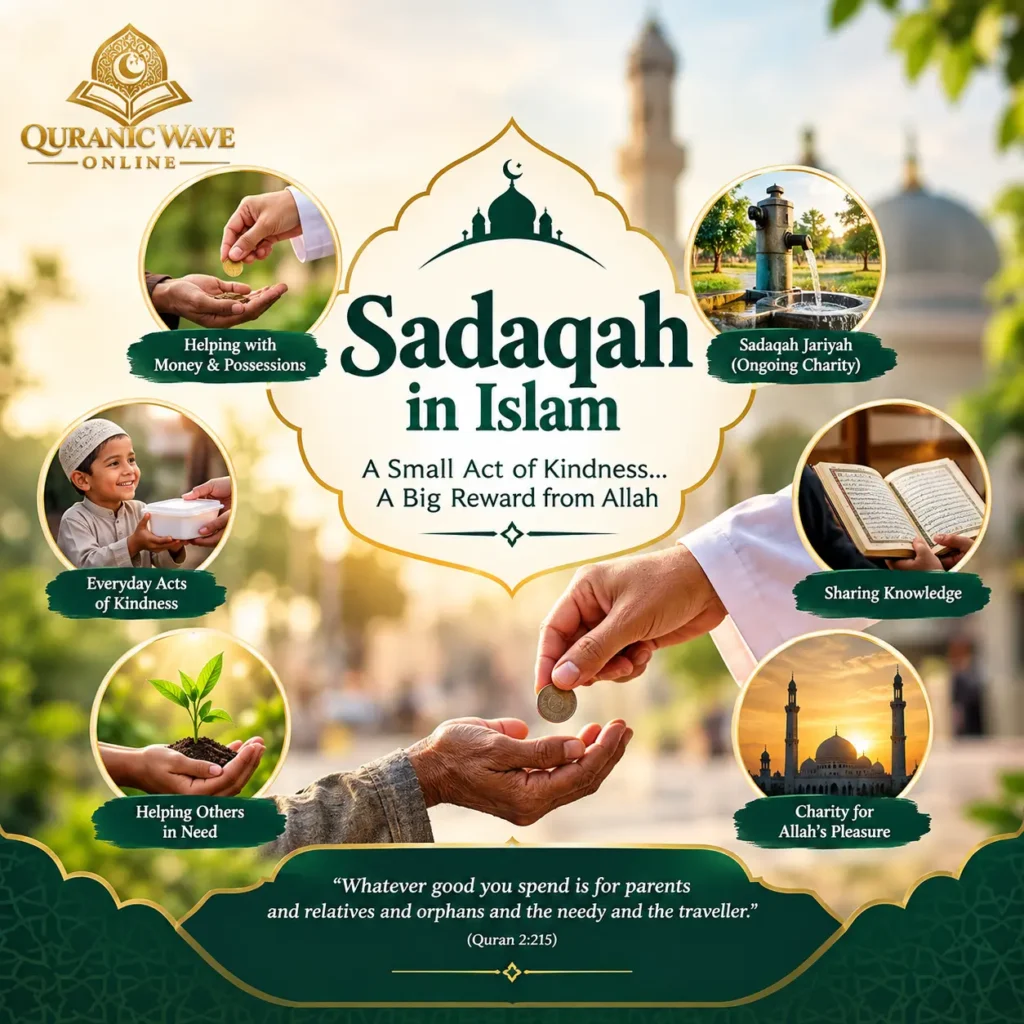
Sadaqah is a voluntary act of charity offered to seek Allah’s pleasure and help others. It can involve money, food, clothing, knowledge, time, or any beneficial action.
Allah says in the Quran:
“Whatever good you spend is for parents and relatives and orphans and the needy and the traveller.” (Quran 2:215, meaning)
This verse highlights the importance of directing charitable spending toward people who need support.
Unlike Zakat, which is an obligatory form of charity with specific rules, ordinary Sadaqah is generally voluntary. Muslims can give it throughout the year according to their means.
Types of Sadaqah in Islam
Islam offers many ways to earn the reward of charity. Not every form requires money.
1. Sadaqah Through Money and Possessions
Giving money, groceries, clothes, medicine, or other necessities to people in need is a common form of Sadaqah. Support can be provided directly or through trustworthy charitable organizations.
The Prophet Muhammad ﷺ said:
“Charity does not decrease wealth.” (Sahih Muslim 2588)
This Hadith encourages generosity and reminds Muslims that sincere charity is not a loss in the sight of Allah.
2. Sadaqah Jariyah (Ongoing Charity)
Sadaqah Jariyah is charity whose benefits continue after the original contribution, such as supporting a water well, building a useful facility, or funding beneficial education.
The Prophet ﷺ said:
“When a person dies, their deeds come to an end except for three: ongoing charity, knowledge that is benefited from, or a righteous child who prays for them.” (Sahih Muslim 1631)
This Hadith explains why lasting beneficial projects can be especially meaningful.
3. Everyday Acts of Kindness
Helping an elderly person, removing something harmful from a road, teaching useful knowledge, and speaking kindly are also charitable acts.
The Prophet ﷺ said:
“Every good deed is charity.” (Sahih al-Bukhari 6021; Sahih Muslim 1005)
A person with limited financial resources can therefore still give Sadaqah every day.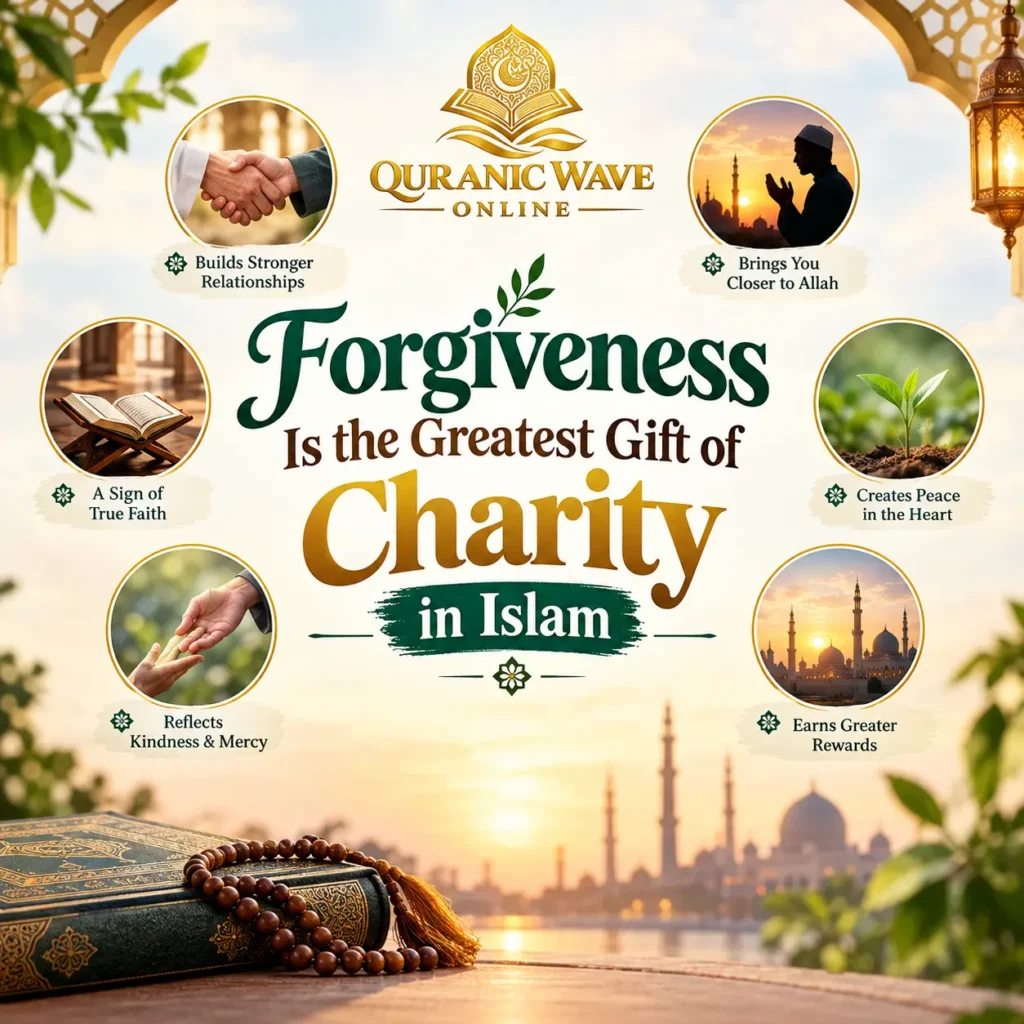
4.Forgiveness is the Greatest Gift of Charity
In Islam, letting go of resentment, pardoning others, and responding to harshness with grace is considered a profound act of charity. It purifies the heart and reflects the noble character taught by the Prophet Muhammad ﷺ.
Read the full article here:
When and How Should You Give Sadaqah?
There is no single day or month when ordinary voluntary Sadaqah must be given. Muslims can give it whenever they are able, although some circumstances make generosity especially valuable.
When to Give Charity
- During Ramadan: Muslims are encouraged to increase their good deeds and generosity.
- When someone is struggling: Timely assistance can protect a person from hunger, debt, or hardship.
- During illness or emergencies: Helping with essential expenses can ease suffering.
- Regularly throughout the year: Small, consistent contributions can support people in lasting ways.
Unlock Your Heart’s Deepest Desires and Find Ultimate Peace:
Duas for Hardship, Anxiety, and Distress
Authentic Duas for Job and Marriage
Allah says:
“Those who spend their wealth by night and by day, secretly and publicly, will have their reward with their Lord.” (Quran 2:274, meaning)
This verse encourages charity at different times and in different circumstances.
How to Give Sadaqah Correctly
- Make your intention sincere. Give to seek Allah’s pleasure rather than praise or recognition.
- Use lawful wealth. Give from money and possessions acquired through halal means.
- Choose deserving recipients. Consider the poor, orphans, struggling families, and people facing genuine hardship.
- Protect the recipient’s dignity. Give respectfully without humiliation or unnecessary publicity.
- Give according to your means. Charity should not involve neglecting essential family responsibilities or taking on harmful debt.
The Prophet ﷺ said:
“Actions are only by intentions.” (Sahih al-Bukhari 1; Sahih Muslim 1907)
This Hadith emphasizes that intention is central to the value of every act of worship.
Rewards of Sadaqah in the Quran and Hadith
The rewards of Sadaqah go beyond helping others. The Quran and Sunnah explain how sincere charity can bring blessings, forgiveness, and protection from punishment.
1. Allah Multiplies the Reward
Allah describes the reward of spending in His cause:
“The example of those who spend their wealth in the way of Allah is like a seed [of grain] which grows seven spikes; in each spike is a hundred grains.” (Quran 2:261, meaning)
This verse illustrates how Allah can multiply the reward of sincere charity beyond what a person gives.
2. Charity Can Erase Sins
The Prophet Muhammad ﷺ said:
“Charity extinguishes sin as water extinguishes fire.” (Jami‘ at-Tirmidhi 614)
This Hadith encourages Muslims to give charity while also sincerely repenting for their mistakes. Charity does not remove the need to fulfil people’s rights or seek forgiveness for wrongdoing.
3. Charity Protects From the Fire
The Prophet ﷺ said:
“Protect yourselves from the Fire, even with half a date in charity.” (Sahih al-Bukhari 1417; Sahih Muslim 1016)
Even a small contribution matters when given sincerely. Muslims should not consider their charity insignificant simply because its monetary value is low.
Which Sadaqah Is Not Accepted or Can Lose Its Reward?
Islam teaches that the acceptance and reward of charity depend on sincerity, lawful earnings, and how the recipient is treated. Certain actions can invalidate charity’s reward or make the act unacceptable.
1. Charity Given to Show Off
Giving money to impress people, gain popularity, or receive praise undermines sincerity. Allah knows the true intention behind every action.
Allah warns against those who spend their wealth to be seen by people (Quran 4:38, meaning).
2. Reminding People of Your Charity
Repeatedly reminding recipients about the money you gave them can hurt their dignity and destroy the reward of charity.
Allah says:
“Do not invalidate your charities with reminders or injury.” (Quran 2:264, meaning)
Give without making the recipient feel indebted, embarrassed, or inferior.
3. Giving From Haram Wealth
Charity from stolen money, fraud, or other unlawful earnings does not become acceptable merely because it is donated. Returning stolen property to its rightful owner is different from giving voluntary charity.
The Prophet ﷺ said:
“Allah is Good and accepts only that which is good.” (Sahih Muslim 1015)
Muslims should ensure that their charitable giving comes from lawful sources.
4. Giving Charity While Neglecting Obligations
Voluntary charity should not be used as an excuse to neglect dependent family members, unpaid debts, or obligatory Zakat when it is due. Each obligation must be addressed according to Islamic rules and the person’s circumstances.
Allah says:
“And they ask you what they should spend. Say, ‘The excess [beyond needs].’” (Quran 2:219, meaning)
This verse provides guidance about spending, although determining financial obligations requires considering the full Islamic legal context.
Are Sadaqah Requested by Magicians or Amils Islamic?
No special charity prescribed by a magician, fortune-teller, or unqualified amil should be treated as a religious requirement without evidence from the Quran and authentic Sunnah.
Some people are told to sacrifice an animal, place food at a particular location, bury money, or give a specific item to remove black magic, break a curse, or satisfy an unseen being. Such instructions are not established forms of Islamic Sadaqah merely because someone calls them charity.
Muslims should avoid practices involving offerings to jinn, invoking anyone besides Allah, superstitious rituals, or claims that a payment guarantees protection from supernatural harm.
Allah says:
“And whoever relies upon Allah—then He is sufficient for him.” (Quran 65:3, meaning)
For spiritual concerns, Muslims can turn to Allah through sincere dua, established ruqyah using the Quran and authentic supplications, and legitimate medical or practical help where needed. A person may still give ordinary charity, but it should be voluntary, sincere, lawful, and free from un-Islamic rituals.
Frequently Asked Questions About Sadaqah
Can I give Sadaqah every day?
Yes. Muslims can give voluntary Sadaqah daily through money, food, assistance, or kindness. The Prophet ﷺ taught that every good deed can be charity (Sahih al-Bukhari 6021).
What is the best time to give Sadaqah?
Charity can be given throughout the year. Ramadan, times of hardship, and moments when someone urgently needs assistance are valuable opportunities to help others. There is no universally required time for ordinary voluntary Sadaqah.
Can Sadaqah be given to non-Muslims?
Yes, voluntary charity may be given to non-Muslims, particularly those in need, provided the circumstances are appropriate. Allah says in Quran 60:8 that He does not forbid kindness and justice toward those who do not fight Muslims because of their religion.
Does Sadaqah remove black magic?
There is no guarantee that giving a particular amount of money will remove black magic. Muslims should avoid unsupported rituals and seek Allah’s help through authentic dua and permissible ruqyah. Charity is an act of worship, not a guaranteed supernatural transaction.
Is Sadaqah the same as Zakat?
No. Zakat is obligatory for eligible Muslims who meet its conditions, while ordinary Sadaqah is generally voluntary. Zakat has specific rules concerning wealth, calculation, and eligible recipients.
Final Thoughts: Make Sadaqah a Part of Your Life
Sadaqah in Islam is a beautiful way to help others, strengthen faith, and seek Allah’s pleasure. It can be a financial contribution, ongoing charity, or a simple act of kindness. Its value is not measured by money alone but also by sincerity, lawful giving, and respect for the recipient.
Start with what you can afford. Feed someone who is hungry, support a struggling family, share beneficial knowledge, or contribute to a lasting charitable project. Avoid showing off, humiliating recipients, and following superstitious practices presented as religious obligations.
Make your next act of Sadaqah sincere, beneficial, and pleasing to Allah. Share this guide with family and friends to encourage more informed and meaningful charity.