
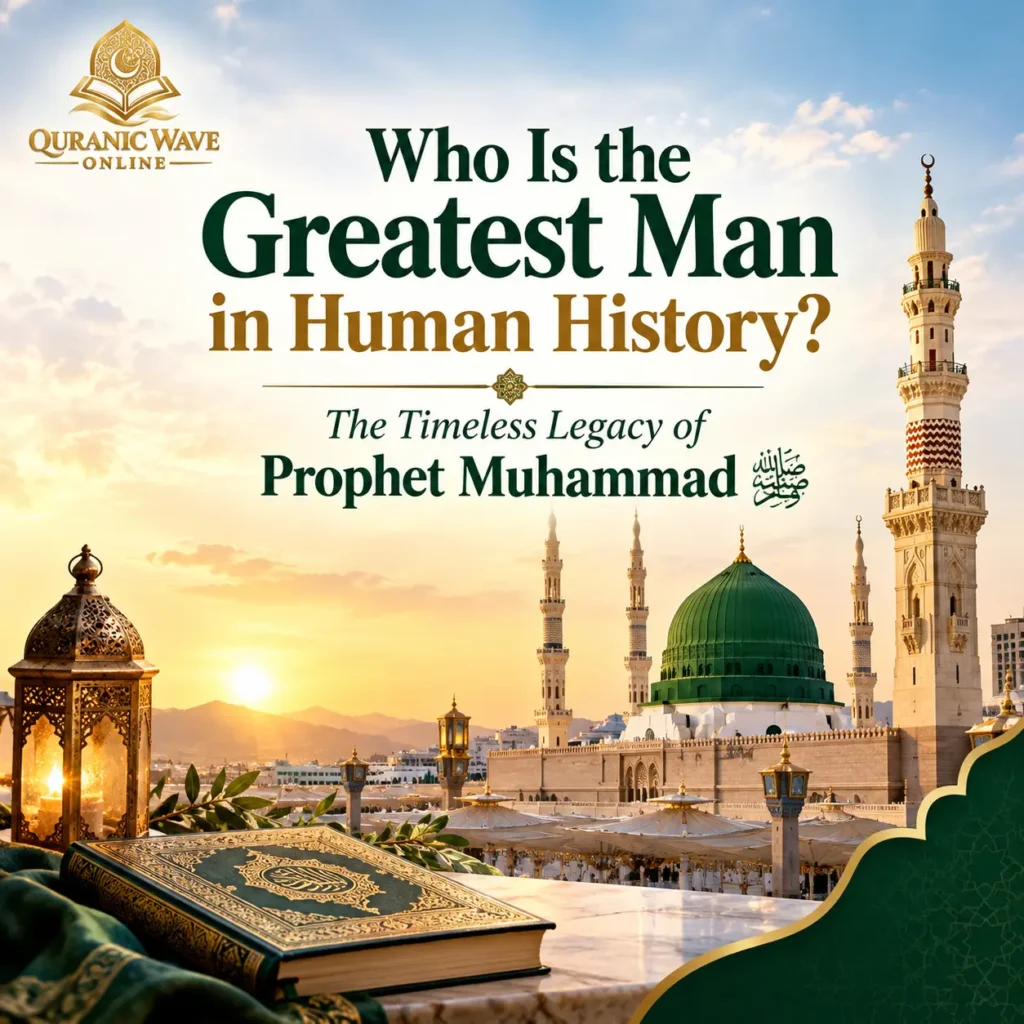
For Muslims, the answer is deeply meaningful: Prophet Muhammad ﷺ, the final Messenger of Allah. His life transformed Arabian society and inspired a global community through faith, compassion, justice, honesty, and devotion to God.
More than 1,400 years after his lifetime, his teachings continue to guide people in worship, family relationships, business, personal conduct, and social responsibility. Understanding his greatness means looking beyond historical achievements to the values he embodied and the lasting influence of his message.
Why Is Prophet Muhammad ﷺ Considered the Greatest Man in Human History?
From the Islamic perspective, Prophet Muhammad ﷺ holds an exceptional position because Allah chose him to deliver the final revelation and guide humanity toward worshipping Him alone.
Allah says in the Quran:
“And We have not sent you, [O Muhammad], except as a mercy to the worlds.”
— Quran 21:107
This verse describes the mercy associated with his mission. He taught people to abandon injustice, care for the vulnerable, uphold truth, and recognize their responsibilities toward their Creator and fellow human beings.
His greatness is not understood through worldly power or wealth alone. Muslims also recognize his patience during hardship, humility despite his leadership, and commitment to conveying Allah’s message.
1. His Character Was a Model of Excellence
One of the most remarkable aspects of Prophet Muhammad’s ﷺ life was his character. Even before receiving revelation, he was known among his people for honesty and trustworthiness.
After becoming a Prophet, he continued to demonstrate patience, forgiveness, generosity, and humility, even when facing hostility.
When Aisha (RA) was asked about his character, she explained that his character was the Quran. This narration is recorded in Sahih Muslim (746).
Her statement highlights how he put Quranic teachings into practice rather than merely speaking about them.
Lessons from His Character
- Honesty: Speak the truth, even when it is difficult.
- Patience: Respond to hardship with faith and perseverance.
- Humility: Treat others respectfully, regardless of their social position.
- Forgiveness: Avoid unnecessary resentment and seek reconciliation where appropriate.
- Trustworthiness: Fulfil promises and respect the rights of others.
These qualities offer practical guidance for anyone seeking to improve their personal and spiritual life.
2. He Taught Mercy and Compassion
Prophet Muhammad ﷺ emphasized kindness toward people, including children, the poor, neighbours, and those experiencing hardship.
Allah describes him in the Quran:
“And indeed, you are of a great moral character.”
— Quran 68:4
His example showed that strength does not require cruelty and that leadership should not be separated from compassion.
He also said:
“He who does not show mercy to our young ones and respect our elders is not one of us.”
— Jamiʿ at-Tirmidhi 1919
This teaching emphasizes that a healthy society depends on care, respect, and responsibility between generations.
His legacy encourages Muslims to express their faith through everyday actions, whether helping a struggling neighbour, speaking gently to family members, or supporting someone in need.
3. He Established Justice and Human Dignity
Justice was another central principle of the Prophet’s ﷺ teachings. He instructed people to uphold fairness even when doing so challenged their personal interests.
The Quran states:
“Indeed, Allah commands you to render trusts to whom they are due and when you judge between people to judge with justice.”
— Quran 4:58
This principle applies to family life, business dealings, leadership, and the treatment of people from different backgrounds.
Prophet Muhammad ﷺ also challenged tribal arrogance and taught that human worth should not depend on wealth, ancestry, or social status.
His message encouraged people to recognize their shared origin and moral responsibilities. Justice, therefore, was not simply an ideal to admire; it was a duty to practise.
4. His Leadership Transformed Society
The life of Prophet Muhammad ﷺ demonstrates how religious guidance can influence an entire community. In seventh-century Arabia, his mission brought together people from different tribes under a shared commitment to faith and moral accountability.
His leadership involved teaching, resolving disputes, establishing agreements, supporting the vulnerable, and organizing a growing Muslim community.
He also emphasized consultation and responsibility. Allah instructs the Prophet ﷺ:
“And consult them in the matter.”
— Quran 3:159
This verse highlights the importance of consultation in decision-making.
His leadership offers enduring lessons: listen before deciding, treat people fairly, accept responsibility, and use authority to serve rather than exploit others.
5. He Remains a Guide for Everyday Life
The lasting influence of Prophet Muhammad ﷺ can be seen in the daily practices of Muslims around the world. His Sunnah provides guidance on worship, manners, family relationships, cleanliness, generosity, and dealings with others.
For example, he said:
“The best of you are those who are best to their families.”
— Jamiʿ at-Tirmidhi 3895
This teaching places good character at the heart of family life.
Muslims can apply his example by:
- Performing prayers sincerely and consistently.
- Speaking respectfully to parents, spouses, children, and neighbours.
- Earning and spending money honestly.
- Helping people without expecting praise.
- Seeking knowledge and correcting personal mistakes.
- Remembering Allah in both ease and difficulty.
Following his example is not limited to religious gatherings. It includes the choices people make when nobody is watching.
6. His Legacy Continues Across Generations
Prophet Muhammad ﷺ passed away in 632 CE, but his teachings continue to shape the beliefs and practices of a global Muslim community.
The Quran, preserved and recited by Muslims, remains central to his message. Hadith literature records his sayings and actions, helping Muslims understand how he applied divine guidance in practical situations.
His legacy also extends to education, charitable giving, family responsibilities, community service, and the pursuit of moral improvement.
Muslims believe his prophethood is part of Allah’s final guidance to humanity. People from other backgrounds may approach his historical influence through different perspectives, but his profound impact on religious and world history is undeniable.
Understanding this legacy requires more than admiration: it invites thoughtful study of his life, teachings, historical context, and example.
How Can We Follow the Example of Prophet Muhammad ﷺ?
Learning about the greatest man in human history becomes more meaningful when knowledge leads to action. A simple way to begin is to choose one teaching and practise it consistently.
- Study his life: Read a reliable Seerah book to understand his mission and experiences.
- Read the Quran with meaning: Reflect on its guidance and the Prophet’s ﷺ role in conveying it.
- Learn authentic Hadith: Explore reliable collections and verify narrations before sharing them.
- Improve your character: Practise honesty, patience, kindness, and fairness in daily interactions.
- Send blessings upon him: Recite Salawat regularly as an expression of love and respect.
- Teach with wisdom: Share beneficial knowledge respectfully and avoid misrepresenting Islamic teachings.
Small, consistent actions can help turn knowledge into a lasting personal habit.
Frequently Asked Questions
Who is the greatest man in human history?
According to Islamic belief, Prophet Muhammad ﷺ is the greatest man in human history because he was Allah’s final Messenger and an exemplary model of faith, mercy, justice, and character.
What does the Quran say about Prophet Muhammad ﷺ?
The Quran describes him as a messenger, a mercy to the worlds (21:107), and a person of great moral character (68:4). It also identifies him as the Messenger of Allah and the seal of the prophets in Quran 33:40.
Why is Prophet Muhammad ﷺ important to Muslims?
Muslims follow his teachings because he conveyed the Quran, demonstrated how to practise Islam, and provided an example of worship, moral conduct, family responsibility, and community life.
What are the most important qualities of Prophet Muhammad ﷺ?
His most celebrated qualities include honesty, mercy, patience, humility, generosity, forgiveness, justice, and trustworthiness.
How can I learn more about the life of Prophet Muhammad ﷺ?
Begin with a reliable Seerah biography, study the Quran with translation, and read authenticated Hadith collections with explanations from qualified scholars.
Conclusion: Discover the Timeless Example of Prophet Muhammad ﷺ
The question “Who is the greatest man in human history?” carries different meanings for different people. For Muslims, Prophet Muhammad ﷺ stands above all others as Allah’s final Messenger and a model of faith, mercy, justice, and noble character.
His life reminds us that true greatness is not measured only by achievements or influence, but also by integrity, compassion, and service to others.
Take the next step: Explore the Seerah of Prophet Muhammad ﷺ, study the Quran with understanding, and begin applying one of his teachings in your daily life. Share this article with family and friends who want to learn more about his remarkable life and enduring legacy.