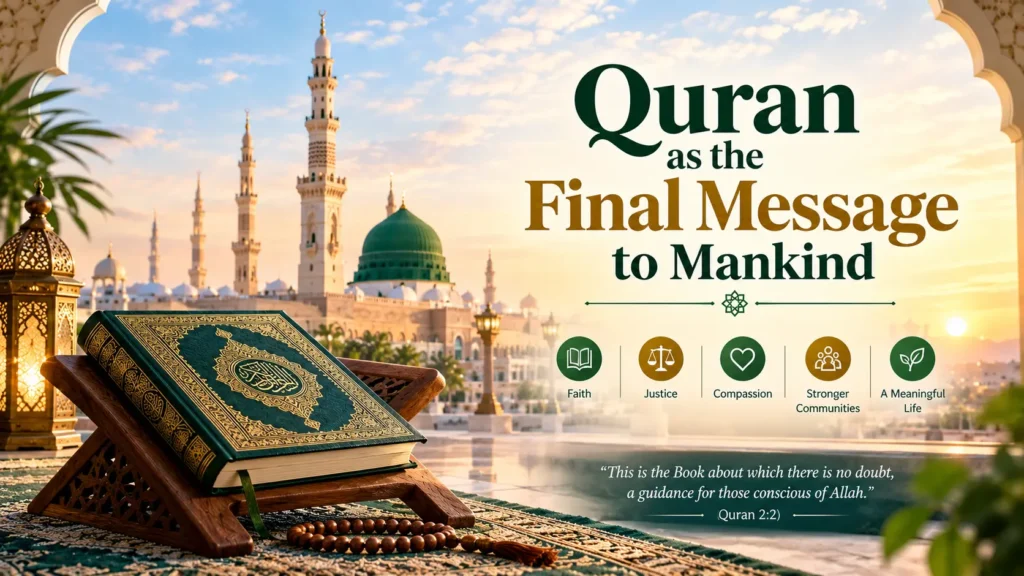
Revealed to Prophet Muhammad ﷺ through Angel Jibreel (Gabriel), the Quran provides spiritual direction, moral principles, and practical guidance for living a meaningful life. Its message reaches beyond any particular nation, culture, or generation, inviting all people to recognize their Creator and live with faith, justice, compassion, and responsibility.
Understanding the Quran as the final message to mankind helps readers discover not only what Muslims believe but also how its teachings can shape everyday decisions and strengthen their relationship with Allah.
What Does It Mean That the Quran Is Allah’s Final Message?
In Islam, the Quran is the final revealed scripture from Allah, completing the line of divine revelation sent through His messengers. Muslims believe that Allah sent earlier scriptures, including the Tawrat (Torah) and Injil (Gospel), before revealing the Quran to Prophet Muhammad ﷺ.
Allah says:
“This is the Book about which there is no doubt, a guidance for those conscious of Allah.”
— Quran 2:2
This verse highlights the Quran’s central purpose: guidance. It explains the foundations of faith, teaches moral responsibility, and encourages people to reflect on creation and their relationship with Allah.
The Quran is not limited to historical events or religious rituals. Its teachings address worship, family relationships, honesty, business dealings, social justice, patience, gratitude, and accountability in the Hereafter.
Before you dive in, learn how to read the Quran properly and discover why parents love choosing a female Quran teacher for young learners to build a solid foundation at home.
Why Is the Quran Considered the Final Revelation?
Muslims believe Prophet Muhammad ﷺ is the final prophet and messenger. Allah declares:
“Muhammad is not the father of any of your men, but is the Messenger of Allah and the seal of the prophets.”
— Quran 33:40
The expression “seal of the prophets” establishes Muhammad ﷺ as the final prophet in Islamic belief. Consequently, the Quran is understood as the final divine scripture, intended to guide humanity until the end of time.
The Quran Is a Message for All Humanity
One of the defining features of the Quran is its universal invitation. Its message is not restricted to Arabs or to the people who lived during the Prophet’s ﷺ lifetime.
Allah says:
“And We have not sent you, [O Muhammad], except as a mercy to the worlds.”
— Quran 21:107
This verse describes the Prophet’s ﷺ mission as a mercy extending to all creation. His teachings encourage kindness, fairness, forgiveness, and concern for others.
The Quran also explicitly describes its message as universal:
“Blessed is He who sent down the Criterion upon His Servant that he may be to the worlds a warner.”
— Quran 25:1
These verses demonstrate why Muslims understand the Quran as guidance for people across different backgrounds and generations.
Its universal principles include:
- Justice: Treat people fairly and stand for what is right.
- Compassion: Show kindness to family members, neighbours, orphans, and those in need.
- Honesty: Speak truthfully and fulfil your promises.
- Accountability: Recognize that actions carry consequences before Allah.
- Worship: Direct devotion to Allah and seek His guidance in every aspect of life.
These principles make the Quran relevant not only to personal spirituality but also to relationships, communities, and society.
The Main Teachings of the Quran for Everyday Life
The Quran provides a comprehensive framework for developing faith, character, and responsible behaviour. Its guidance becomes especially meaningful when translated into daily actions.
1. Belief in One God
The foundation of the Quran’s message is Tawheed, the belief that Allah alone deserves worship.
Surah Al-Ikhlas summarizes this belief:
“Say, ‘He is Allah, [who is] One.’”
— Quran 112:1
Tawheed encourages believers to place their trust in Allah, seek His help, and avoid associating partners with Him.
2. Developing Good Character
Faith is reflected in how people treat others. The Quran repeatedly encourages truthfulness, patience, humility, and kindness.
Allah says:
“Indeed, Allah commands you to render trusts to whom they are due and when you judge between people to judge with justice.”
— Quran 4:58
This teaching applies to family responsibilities, professional duties, financial transactions, and leadership. A Muslim’s character should reflect the values they learn from revelation.
3. Caring for Others
The Quran teaches that righteousness involves more than outward religious observance. It also includes generosity and concern for people facing hardship.
In Quran 2:177, Allah connects righteousness with belief, prayer, giving wealth to relatives and those in need, fulfilling promises, and remaining patient during difficulties.
This verse offers a practical reminder: sincere faith should lead to meaningful actions that benefit others.
4. Preparing for the Hereafter
The Quran teaches that earthly life is temporary and that every person is accountable to Allah.
Allah says:
“So whoever does an atom’s weight of good will see it.”
— Quran 99:7
This verse encourages believers not to underestimate small acts of goodness. Helping someone, speaking kindly, giving charity, and fulfilling a responsibility can all become meaningful deeds when done sincerely.
How Can We Make the Quran a Guide in Daily Life?
Reading the Quran is essential, but understanding and applying its teachings help transform knowledge into practice.
Here are five practical ways to begin:
- Read a little every day. Set aside 10–15 minutes for Quran recitation, even if you begin with a few verses.
- Read the translation. Understanding the meaning helps you reflect on the message rather than reciting without comprehension.
- Study the context. Consult reliable tafsir to understand verses accurately and avoid drawing conclusions from isolated passages.
- Apply one lesson at a time. Practise honesty in your dealings, patience during difficulties, or generosity toward those in need.
- Reflect and make dua. Ask Allah to help you understand His words and act according to His guidance.
The Prophet Muhammad ﷺ said:
“The best of you are those who learn the Qur’an and teach it.”
— Sahih al-Bukhari 5027
This authentic hadith emphasizes the value of learning the Quran and sharing its teachings responsibly. It also encourages Muslims to make Quranic education a continuing part of their lives.
Is the Quran Relevant in the Modern World?
Despite changes in technology, lifestyles, and social expectations, human beings continue to face questions about purpose, morality, relationships, and responsibility.
The Quran addresses enduring aspects of human life through principles such as justice, consultation, fulfilling commitments, caring for parents, and avoiding dishonesty.
For example, Quran 17:23 commands kindness toward parents, while Quran 16:90 states that Allah commands justice and good conduct.
These teachings can guide decisions in homes, workplaces, businesses, and communities. However, applying specific verses to complex modern questions requires sound knowledge, attention to context, and, where appropriate, guidance from qualified Islamic scholars.
The Quran’s enduring relevance lies in its spiritual foundations and moral guidance, not in treating every verse as a technical answer to every modern problem.
Frequently Asked Questions About the Quran as the Final Message to Mankind
1. Why is the Quran called the final message to mankind?
Muslims believe the Quran is Allah’s final revealed scripture, given to Prophet Muhammad ﷺ, who is described in Quran 33:40 as the seal of the prophets. Its guidance is understood to be for humanity until the end of time.
2. Is the Quran meant for all humanity?
Yes. According to Islamic belief, the Quran’s message is universal. Quran 25:1 describes the revelation as a warning to the worlds, while Quran 21:107 describes Prophet Muhammad ﷺ as a mercy to the worlds.
3. What is the main purpose of the Quran?
The Quran’s primary purpose is to guide people toward belief in Allah, righteous conduct, moral responsibility, and preparation for the Hereafter. Quran 2:2 describes it as guidance for those conscious of Allah.
4. How can beginners understand the Quran?
Beginners can start with short surahs, read a reliable translation in their preferred language, listen to qualified teachers, and consult authentic tafsir. Consistent study and reflection can gradually deepen understanding. For younger learners building their foundational knowledge, you can also explore structured resources like this Arabic Alphabet for Beginners Guide.
5. What makes the Quran different from earlier scriptures in Islam?
Muslims believe the Quran is the final revelation and that Prophet Muhammad ﷺ is the final prophet. The Quran also confirms the divine origin of earlier revelations while serving as the final scripture in Islamic belief.
Let the Quran Guide Your Life
The Quran as the final message to mankind represents, for Muslims, Allah’s enduring guidance for faith, character, relationships, and the journey toward the Hereafter. Its teachings call people to worship Allah alone, act justly, show compassion, and take responsibility for their choices.
Understanding this message begins with sincere reading, thoughtful reflection, and a willingness to put its principles into practice. No matter where you are on your learning journey, you can start with a few verses today and gradually build a deeper connection with the Quran.
Start your journey today: Read a passage of the Holy Quran, explore its translation, and reflect on one lesson you can apply in your life. Let its guidance inspire you to grow in faith, strengthen your character, and draw closer to Allah.