
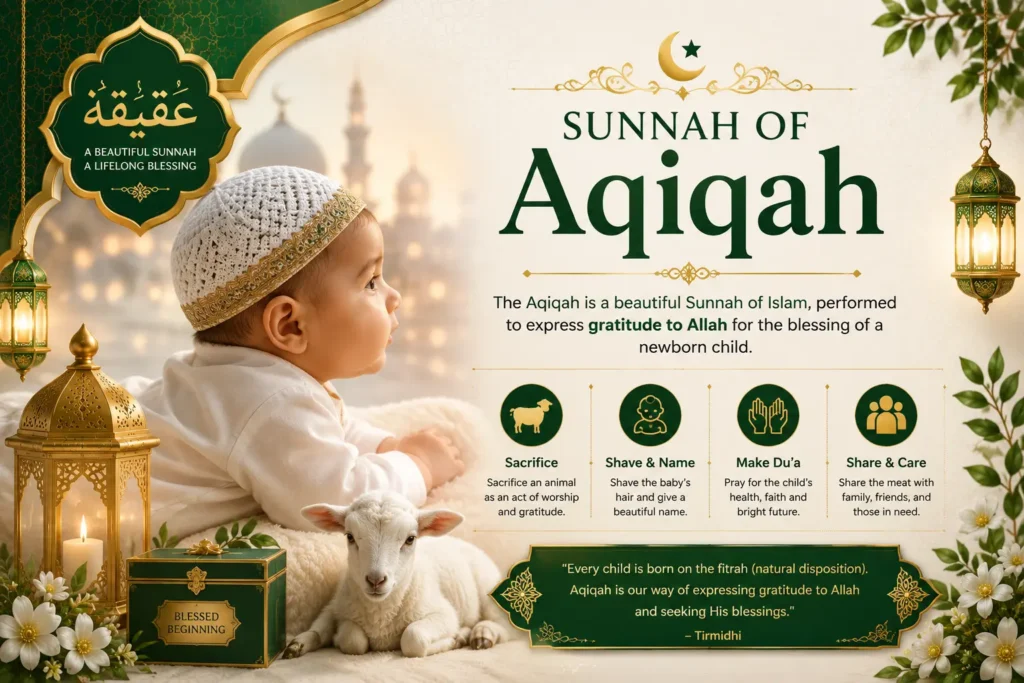
Welcoming a new baby into the family is one of life’s greatest blessings. In Islam, this joyful occasion is marked with gratitude, prayer, and a beautiful practice known as the sunnah of aqiqah.
Many Muslims have questions such as:
- What is Aqiqah?
- Is Aqiqah compulsory?
- When should it be performed?
- How many animals should be sacrificed?
- Who can eat the meat?
This comprehensive guide explains everything you need to know about Aqiqah in Islam, using authentic Islamic teachings in a simple and easy-to-understand way.
Whether you are a new parent, a family member, or simply learning about Islamic traditions, this article will help you understand the purpose, rules, and spiritual significance of Aqiqah.
What Is Aqiqah?
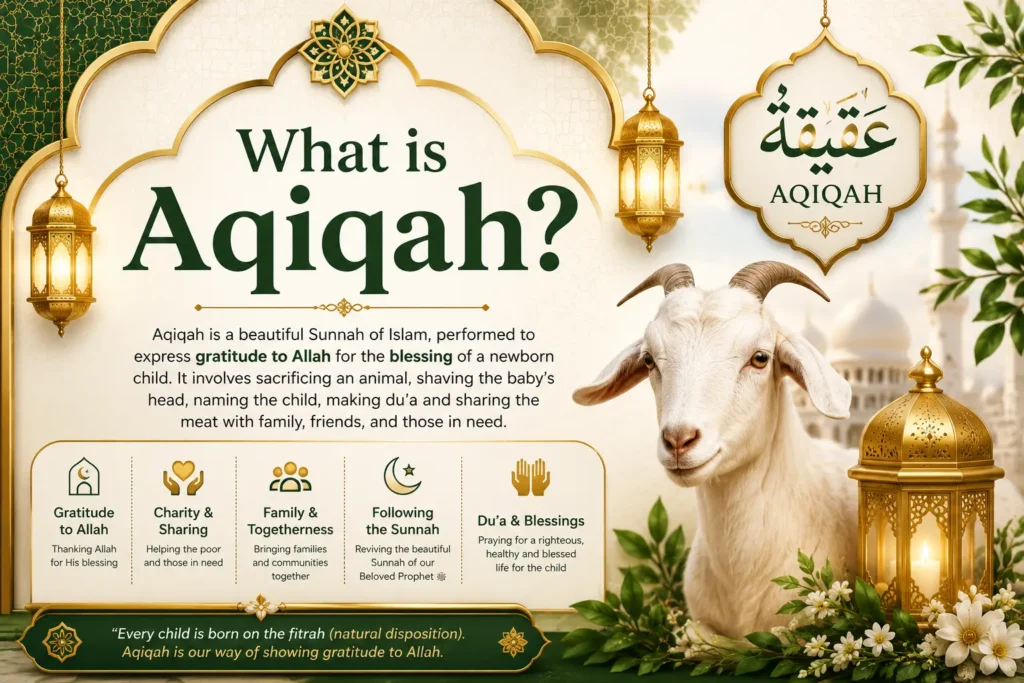
Aqiqah is the Islamic practice of sacrificing an animal to thank Allah for the blessing of a newborn child. If you want to define aqiqah or understand the hakika meaning, it refers to this traditional muslim baby aqiqah tradition. Whether people spell it akika, aqiqa, akikah, akeeka, or ask about aqeeqah in islam, the core purpose remains the same. Understanding aqiqah in islam—or hakika in islam—helps parents celebrate their child birth according to authentic Islamic teachings.
It is a highly recommended Sunnah of Prophet Muhammad ﷺ and is traditionally performed after the birth of a baby. Along with the sacrifice, Muslims often shave the baby’s head, give the child a meaningful Islamic name, and distribute the meat among family, friends, and those in need.
Aqiqah is a beautiful act of gratitude, charity, and celebration that strengthens family and community bonds.
Meaning of Aqiqah in Islam
The Arabic word Aqiqah (عقيقة) originally refers to the hair on a newborn baby’s head.
In Islamic practice, the term has come to describe the sacrifice offered after a child’s birth as an expression of thankfulness to Allah.
It symbolizes:
- Gratitude to Allah
- Following the Sunnah
- Charity towards others
- Celebrating new life
- Seeking blessings for the child
Why Is Aqiqah Important in Islam?
Aqiqah is much more than a celebration.
This sacred tradition is much more than a simple family celebration.
It serves as a reminder that every child is a gift from Allah and that blessings should be acknowledged with worship, generosity, and charity.
Some of the wisdom behind Aqiqah includes:
- Thanking Allah for a healthy child.
- Reviving the Sunnah of Prophet Muhammad ﷺ.
- Feeding relatives, neighbors, and the poor.
- Bringing families and communities together.
- Praying for the child’s well-being and righteous future.
Is Aqiqah in Islam Obligatory or Sunnah?
Islamic scholars follow specific aqiqah rules (or akika rules in islam) where this event is a recommended Sunnah, not obligatory. These akeeka rules ensure that financially capable parents can fulfill the tradition without hardship.
However:
- There is no sin if someone genuinely cannot afford it.
- Islam never places hardship upon believers.
- Gratitude to Allah can always be expressed through prayers and good deeds.
When Should Aqiqah Be Performed?
When planning the event , the preferred time according to the Sunnah is the seventh day after the baby’s birth.If this is not possible, many scholars state that it may be performed later.
Recommended timeline
| Day | Recommendation |
|---|---|
| 7th Day | Best and preferred time |
| 14th Day | Acceptable according to many scholars |
| 21st Day | Also considered acceptable by many scholars |
| Later | Can still be performed when possible |
The most important point is sincerity and the ability to perform the Sunnah.
How Many Animals Are Sacrificed?
When following traditional Islamic guidelines, the recommended practice according to the Sunnah is as follows:
| Child | Animals |
|---|---|
| Boy | Two sheep or goats (preferred) |
| Girl | One sheep or goat |
When planning akika for boy, two animals are traditional, but one is acceptable under financial constraints. Islam values sincerity over hardship.
Conditions for the Animal
The animal should meet similar standards to those used for Qurbani.
It should be:
- Healthy
- Free from major defects
- Of suitable age
- Treated kindly
- Slaughtered according to Islamic guidelines
Choosing a healthy animal reflects respect for this act of worship.
What Happens During Aqiqah?
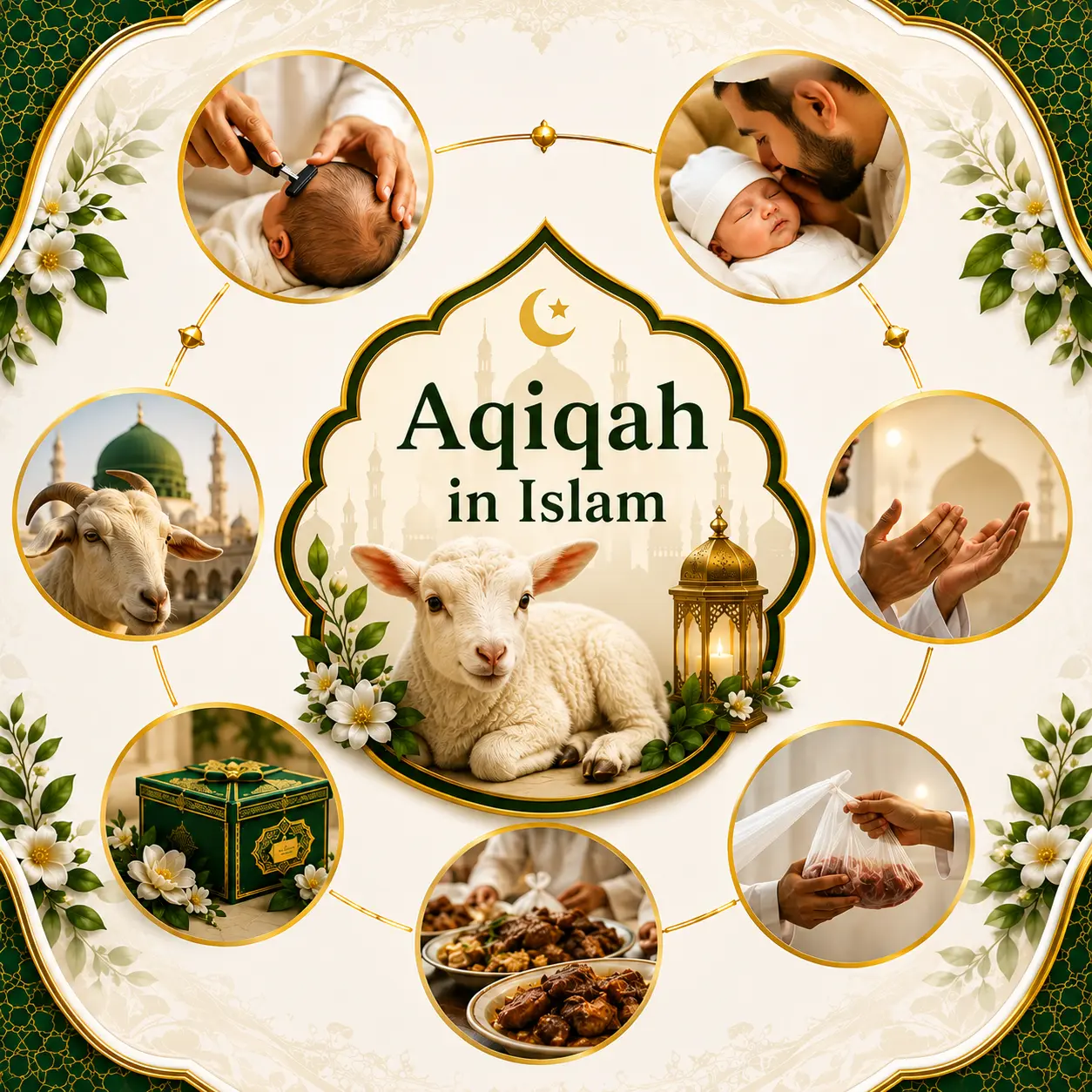
A typical aqiqah ceremony follows a set structure. Knowing what is the procedure of aqiqah helps parents plan the event properly:
1. Sacrifice the Animal
During the muslim aqiqah ceremony, the sacrifice is made in Allah’s name as an act of gratitude.
2. Name the Baby
Parents are encouraged to choose a beautiful and meaningful Islamic name.
Good names carry positive meanings and reflect Islamic values.
3. Shave the Baby’s Head
For newborns, shaving the head is a Sunnah.
Many families also give charity equal to the approximate weight of the baby’s hair in silver.
4. Make Du’a
Parents pray for:
- Good health
- Strong faith
- Protection
- Righteous character
- Success in this life and the Hereafter
5. Share the Meat
The meat is commonly shared with:
- Family
- Friends
- Neighbors
- Poor and needy families
Sharing food spreads happiness and strengthens community relationships.
Can Parents Eat the Aqiqah Meat?
Yes! Whenever I teach my students or share this Sunnah with family members, I always remind them that Islam is a religion of joy and gratitude.
Unlike some common misconceptions, parents and immediate family members are fully permitted—and even encouraged—to eat from the sacrifice. When we perform Aqiqah in Islam, sharing a wholesome meal with our loved ones allows us to celebrate Allah’s blessings together and enjoy the full spiritual reward of this tradition.
It is recommended to distribute portions among:
- Family members
- Relatives
- Friends
- Neighbors
- People in need
The exact distribution is flexible.
Who Should Pay for Aqiqah?
Normally, the father or guardian performs Aqiqah if financially capable.
If another relative wishes to contribute voluntarily, many scholars allow this as an act of kindness.
Benefits of Aqiqah in Islam
Performing Aqiqah brings many spiritual and social benefits.
Spiritual Benefits
- Expresses gratitude to Allah
- Revives an important Sunnah
- Increases remembrance of Allah
- Encourages generosity
Family Benefits
- Celebrates the child’s arrival
- Strengthens family relationships
- Creates lifelong memories
- Brings relatives together
Community Benefits
- Feeds those in need
- Promotes charity
- Builds stronger communities
- Encourages sharing and compassion
Common Mistakes to Avoid
Many families unknowingly make mistakes regarding Aqiqah.
Avoid these common errors:
- Believing Aqiqah is compulsory.
- Delaying it without any reason despite being able.
- Thinking the parents cannot eat the meat.
- Spending beyond one’s financial ability.
- Turning the occasion into an extravagant event rather than a simple act of worship.
Islam encourages moderation and sincerity.
Difference Between Aqiqah and Qurbani
| Aqiqah | Qurbani |
|---|---|
| Celebrates birth of a child | Commemorates Prophet Ibrahim’s obedience |
| Performed after childbirth | Performed during Eid al-Adha |
| Sunnah for newborn | Sunnah Mu’akkadah (or obligatory according to some scholars) for eligible Muslims |
| Connected with welcoming a child | Connected with Eid worship |
Although both involve animal sacrifice, they have different purposes.
Practical Tips for Parents
If you are planning an Aqiqah, consider these helpful tips:
- Plan your budget early.
- Learn the Sunnah before arranging the event.
- Choose healthy animals.
- Keep the gathering simple.
- Remember those in need.
- Focus on gratitude rather than extravagance.
- Make sincere du’a for your child.
Looking for inspiring bedtime reads for your children? Discover our uplifting Islamic stories for kids, crafted to nurture young hearts and minds.”
Conclusion
In summary, performing Aqiqah in Islam is a cherished Sunnah that allows parents to express heartfelt gratitude to Allah for the gift of a newborn. From sacrificing healthy animals to sharing meat with loved ones and those in need, every aspect of Aqiqah in Islam emphasizes generosity, faith, and family unity. By keeping the ceremony simple and following authentic guidelines, you can fulfill this blessed tradition with ease and spiritual devotion
Frequently Asked Questions (FAQs)
What is Aqiqah in Islam?
Aqiqah Ceremony is the Sunnah practice of sacrificing an animal to thank Allah for the birth of a child while sharing the meat with family, friends, and those in need.
Is Aqiqah compulsory?
No. Most Islamic scholars consider Aqiqah a highly recommended Sunnah rather than an obligation.
When should Aqiqah be done?
The preferred time is the seventh day after birth. If missed, it may be performed later according to many scholars.
How many animals are required?
Traditionally:
- Two sheep or goats for a boy.
- One sheep or goat for a girl.
Can parents eat Aqiqah meat?
Yes. Parents, relatives, friends, and the poor may all eat from the Aqiqah meat.
Can Aqiqah be performed later in life?
Many scholars permit Aqiqah to be performed after the seventh day if it was delayed for a valid reason.
Can one animal be offered for a baby boy?
While two animals are preferred, many scholars allow one if financial circumstances make two difficult.
Are terms like “akika” or “hakika” different from Aqiqah?
No, they refer to the exact same Islamic tradition. Variations like akika in islam or hakika in islam are simply common alternative spellings or regional pronunciations of the Arabic word Aqiqah (عقيقة).
Final Thoughts
Aqiqah in Islam is one of Islam’s beautiful traditions that combines gratitude, worship, charity, and family celebration. It reminds Muslims that every child is a blessing from Allah and encourages parents to begin their child’s life with remembrance of Allah, generosity, and sincere prayer.
While it is a highly recommended Sunnah, Islam emphasizes ease and sincerity. Families should perform Aqiqah according to their means without unnecessary financial burden or extravagance.
By understanding the true purpose of Aqiqah and following authentic Islamic guidance, parents can make this special occasion meaningful, rewarding, and spiritually enriching.
If you found this guide helpful, share it with family and friends so more people can learn about the beautiful Sunnah of Aqiqah. Explore our other Islamic resources for trusted guidance on Quran, Salah, Duas, and everyday Islamic living.