

Death is a reality that every person will eventually face. The Qur’an reminds us that every soul will taste death, while the Sunnah teaches Muslims how to respond to death with patience, faith, remembrance, and sincere dua.
I have gathered here authentic adhkar and duas about death, dying, and funerals from the Qur’an and reliable hadith. These supplications cover different moments: remembering death, visiting a dying person, asking Allah for a good ending, praying for someone who has passed away, and offering condolences to a grieving family.
Rather than relying on commonly shared phrases without checking their sources, this guide focuses on supplications that have a basis in the Qur’an or authentic Sunnah.
What Does Islam Teach Us About Death?
Death is not presented in Islam as something to ignore or hide from. It is part of Allah’s decree and a reminder that our worldly life is temporary.
Allah says:
كُلُّ نَفْسٍ ذَائِقَةُ الْمَوْتِ
“Every soul will taste death.”
Qur’an 3:185
The same verse reminds believers that the true success is not simply having a long life, but being saved from the Fire and entering Paradise.
Allah also says:
أَيْنَمَا تَكُونُوا يُدْرِككُّمُ الْمَوْتُ وَلَوْ كُنتُمْ فِي بُرُوجٍ مُّشَيَّدَةٍ
“Wherever you may be, death will overtake you, even if you should be within towers of lofty construction.”
— Qur’an 4:78
These verses encourage us to remember the Hereafter while still living our lives responsibly.
Dua for Remembering Death and Returning to Allah
One of the most important Qur’anic reminders concerning death is the statement believers make when facing a calamity.
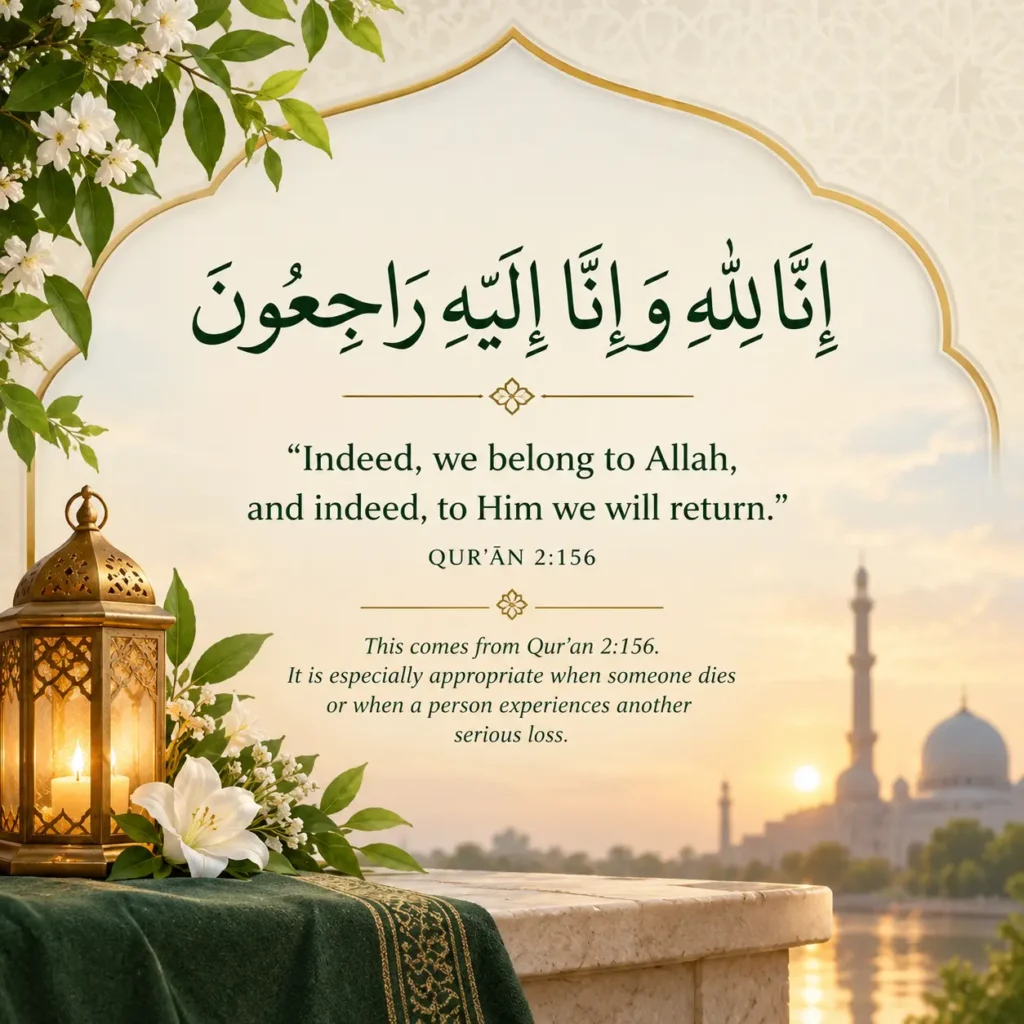
Dua: Inna Lillahi Wa Inna Ilayhi Raji’un
Arabic:
إِنَّا لِلَّهِ وَإِنَّا إِلَيْهِ رَاجِعُونَ
Transliteration:
Inna lillahi wa inna ilayhi raji’un.
Meaning:
“Indeed, we belong to Allah, and indeed to Him we will return.”
This comes from Qur’an 2:156. It is especially appropriate when someone dies or when a person experiences another serious loss.
Allah then praises those who respond with patience and says that they receive blessings and mercy from their Lord.
Dua When Hearing That Someone Has Died
When a Muslim hears about the death of another person, saying Inna lillahi wa inna ilayhi raji’un is appropriate.
The Prophet Muhammad ﷺ also taught a supplication for calamity:
اللَّهُمَّ أْجُرْنِي فِي مُصِيبَتِي، وَأَخْلِفْ لِي خَيْرًا مِنْهَا
Transliteration:
Allahumma’jurni fi musibati, wa akhlif li khayran minha.
Meaning:
“O Allah, reward me for my calamity and replace it for me with something better.”
This dua is reported in Sahih Muslim in connection with responding to calamity.
It can help a grieving person turn toward Allah rather than allowing grief to become a reason for despair.
Dua for a Person Who Is Dying
When visiting someone who is seriously ill or approaching death, Muslims should speak gently and encourage good words.
The Prophet ﷺ said:
لَقِّنُوا مَوْتَاكُمْ لَا إِلَهَ إِلَّا اللَّهُ
“Prompt your dying ones to say: La ilaha illallah.”
— Sahih Muslim
Here, “dying ones” refers to those who are approaching death.
La Ilaha Illallah
Arabic:
لَا إِلَهَ إِلَّا اللَّهُ
Transliteration:
La ilaha illallah.
Meaning:
“There is no deity worthy of worship except Allah.”
A dying person should not be pressured harshly. The purpose is gentle encouragement toward the testimony of faith.
Dua for a Good Ending
A Muslim naturally hopes to meet Allah with faith and righteousness. The Qur’an gives us a beautiful dua that asks Allah not to let our hearts deviate after guidance.
Rabbana La Tuzigh Qulubana
Arabic:
رَبَّنَا لَا تُزِغْ قُلُوبَنَا بَعْدَ إِذْ هَدَيْتَنَا وَهَبْ لَنَا مِن لَّدُنكَ رَحْمَةً ۚ إِنَّكَ أَنتَ الْوَهَّابُ
Transliteration:
Rabbana la tuzigh qulubana ba’da idh hadaytana wa hab lana milladunka rahmah, innaka antal-Wahhab.
Meaning:
“Our Lord, let not our hearts deviate after You have guided us and grant us from Yourself mercy. Indeed, You are the Bestower.”
— Qur’an 3:8
This is a Qur’anic dua for steadfastness and mercy, making it especially meaningful when thinking about one’s final journey.
Dua for Protection From the Punishment of the Grave
The Prophet ﷺ taught his Companions to seek Allah’s protection from several serious matters, including the punishment of the grave.
Allahumma Inni A’udhu Bika
Arabic:
اللَّهُمَّ إِنِّي أَعُوذُ بِكَ مِنْ عَذَابِ جَهَنَّمَ، وَمِنْ عَذَابِ الْقَبْرِ، وَمِنْ فِتْنَةِ الْمَحْيَا وَالْمَمَاتِ، وَمِنْ شَرِّ فِتْنَةِ الْمَسِيحِ الدَّجَّالِ
Transliteration:
Allahumma inni a’udhu bika min ‘adhabi Jahannam, wa min ‘adhabil-qabr, wa min fitnatil-mahya wal-mamat, wa min sharri fitnatil-Masihid-Dajjal.
Meaning:
“O Allah, I seek refuge in You from the punishment of Hell, from the punishment of the grave, from the trials of life and death, and from the evil trial of the False Messiah.”
The Prophet ﷺ taught this supplication in connection with the prayer. It is recorded in Sahih al-Bukhari and Sahih Muslim.
Authentic Dua for the Deceased
After someone dies, one of the greatest things we can do for them is make sincere dua.
The Prophet ﷺ taught a funeral supplication asking Allah to forgive and have mercy upon the deceased.
Dua for a Deceased Muslim
Arabic:
اللَّهُمَّ اغْفِرْ لَهُ وَارْحَمْهُ، وَعَافِهِ وَاعْفُ عَنْهُ، وَأَكْرِمْ نُزُلَهُ، وَوَسِّعْ مُدْخَلَهُ، وَاغْسِلْهُ بِالْمَاءِ وَالثَّلْجِ وَالْبَرَدِ، وَنَقِّهِ مِنَ الْخَطَايَا كَمَا نَقَّيْتَ الثَّوْبَ الْأَبْيَضَ مِنَ الدَّنَسِ
Transliteration:
Allahummaghfir lahu warhamhu, wa ‘afihi wa’fu ‘anhu, wa akrim nuzulahu, wa wassi’ mudkhalahu, waghsilhu bil-ma’i wath-thalji wal-barad, wa naqqihi minal-khataya kama naqqaytath-thawbal-abyada minad-danas.
Meaning:
“O Allah, forgive him and have mercy on him, pardon him and grant him well-being, honor his reception, widen his entrance, wash him with water, snow, and hail, and cleanse him of sins as You have cleansed a white garment of impurities.”
— Sahih Muslim
For a deceased woman, the Arabic pronouns can be changed accordingly.
Dua for the Funeral Prayer
The funeral prayer contains several supplications for the deceased. Another authentic dua taught by the Prophet ﷺ is:
اللَّهُمَّ اغْفِرْ لِحَيِّنَا وَمَيِّتِنَا، وَشَاهِدِنَا وَغَائِبِنَا، وَصَغِيرِنَا وَكَبِيرِنَا، وَذَكَرِنَا وَأُنْثَانَا
Meaning:
“O Allah, forgive our living and our dead, those present among us and those absent, our young and our old, our males and our females.”
This supplication is reported in Sunan Abi Dawud and Jami’ at-Tirmidhi.
The funeral prayer is therefore not merely a formal ritual. It is an opportunity to ask Allah sincerely for forgiveness and mercy for the deceased.
Dua After Burying the Deceased
After the burial, the Prophet ﷺ would ask Allah to forgive his companion and request steadfastness for him.
The Prophet ﷺ said:
اسْتَغْفِرُوا لِأَخِيكُمْ وَسَلُوا لَهُ بِالتَّثْبِيتِ فَإِنَّهُ الْآنَ يُسْأَلُ
Meaning:
“Ask forgiveness for your brother and ask that he be made steadfast, for he is now being questioned.”
— Sunan Abi Dawud
This teaches us an important practice: after burial, make dua for the deceased instead of treating the burial as the end of our responsibility toward them.
Dua for Forgiveness and Mercy for Deceased Believers
The Qur’an also teaches believers to pray for those who came before them in faith.
Arabic:
رَبَّنَا اغْفِرْ لَنَا وَلِإِخْوَانِنَا الَّذِينَ سَبَقُونَا بِالْإِيمَانِ
Transliteration:
Rabbanaghfir lana wa li ikhwaninalladhina sabaquna bil-iman.
Meaning:
“Our Lord, forgive us and our brothers who preceded us in faith.”
— Qur’an 59:10
This is a beautiful Qur’anic example of remembering deceased believers in dua.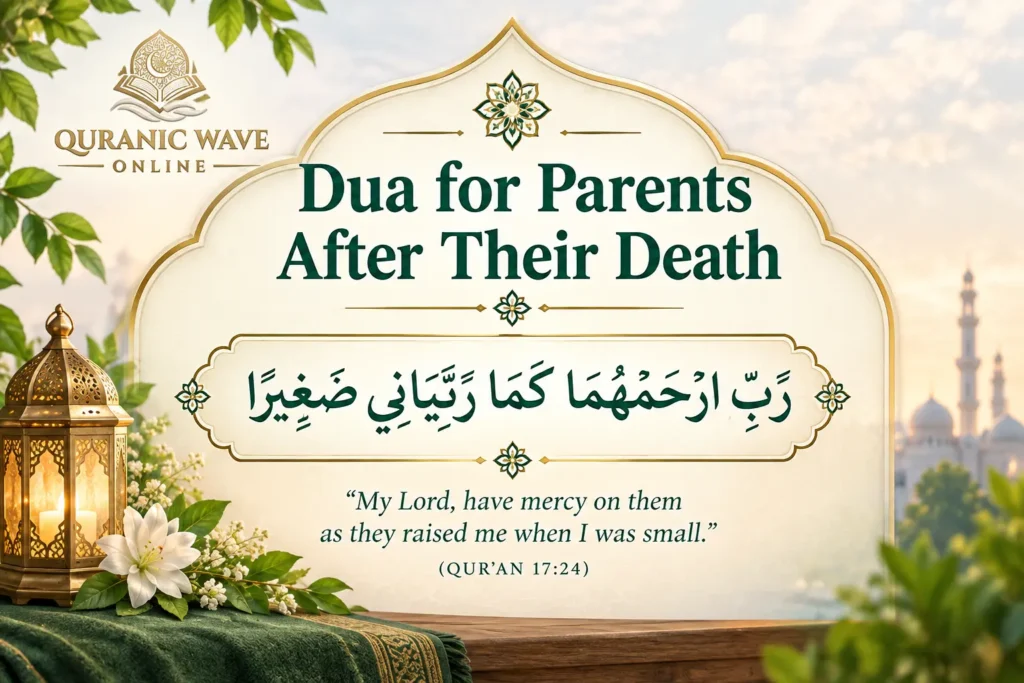
Dua for Parents After Their Death
Allah teaches children to ask for mercy for their parents:
رَّبِّ ارْحَمْهُمَا كَمَا رَبَّيَانِي صَغِيرًا
Transliteration:
Rabbir-hamhuma kama rabbayani saghira.
Meaning:
“My Lord, have mercy upon them as they raised me when I was small.”
— Qur’an 17:24
This dua remains meaningful throughout a person’s life and is particularly touching when a parent has passed away.
Finding Strength in Loss: A Personal Reflection
There is no substitute for a mother in this world—a truth that hits even harder as an only daughter with no sisters. When I lost my mother, the void felt absolute. I wept deeply, yet I refused to complain to Allah or ask, “Why her?” or “Why now?” Instead, my heart turned toward gratitude.
I thanked Allah for choosing me to remain alive so that I can continually make dua for her, engage in sadaqah jariyah (ongoing charity) on her behalf, and seek to elevate her ranks in Jannah.
Through this trial, I learned that holding onto authentic duas for death and dying allows us to transform our grief into continuous mercy for our loved ones. Death is not merely an ending; it is a profound spiritual trial for those left behind. As Allah reminds us in the Quran:
“And We will surely test you with something of fear and hunger and a loss of wealth and lives and fruits, but give good tidings to the patient.”
Surah Al-Baqarah (2:155)
What Should You Say to a Bereaved Family?
When offering condolences, Islam encourages words that provide patience and remind people of Allah.
There is no need to create elaborate speeches. Simple, sincere words are often more appropriate.
You can say:
- Inna lillahi wa inna ilayhi raji’un.
- May Allah forgive the deceased and have mercy upon them.
- May Allah grant you patience and reward you for your loss.
- May Allah give the family strength and comfort.
The focus should be on compassion rather than saying something merely because it is customary.
What to Do When Someone Dies: A Simple Guide
If someone close to you dies, the following approach can help you remain focused on what Islam teaches:
- Say Inna lillahi wa inna ilayhi raji’un.
- Make dua for the deceased.
- Inform close family members and arrange the funeral according to Islamic guidance.
- Avoid unnecessary arguments or worldly distractions.
- Participate in the funeral prayer when possible.
- Make dua after burial.
- Comfort the family with kind and appropriate words.
- Continue praying for the deceased afterward.
Important Adhkar and Duas at a Glance
| Situation | Dua or Dhikr | Source |
|---|---|---|
| Hearing about a death or calamity | Inna lillahi wa inna ilayhi raji’un | Qur’an 2:156 |
| Calamity and grief | Allahumma’jurni fi musibati… | Sahih Muslim |
| Dying person | La ilaha illallah | Sahih Muslim |
| Seeking protection from grave punishment | Allahumma inni a’udhu bika… | Bukhari & Muslim |
| Funeral prayer | Allahummaghfir lihayyina wa mayyitina… | Abu Dawud, Tirmidhi |
| Dua for deceased | Allahummaghfir lahu warhamhu… | Sahih Muslim |
| After burial | Ask Allah for forgiveness and steadfastness | Abu Dawud |
| Dua for deceased parents | Rabbir-hamhuma kama rabbayani saghira | Qur’an 17:24 |
| Dua for earlier believers | Rabbanaghfir lana wa li ikhwanina… | Qur’an 59:10 |
Common Questions About Death and Funeral Duas
What is the dua when someone dies?
Say:
Inna lillahi wa inna ilayhi raji’un
“Indeed, we belong to Allah, and indeed to Him we will return.”
You may then make dua asking Allah to forgive the deceased and grant patience to the family.
What should I read for someone who is dying?
The Prophet ﷺ instructed Muslims to gently encourage a dying person to say La ilaha illallah. The environment should remain calm and respectful.
What dua should I make for someone who has died?
You can use the authentic funeral dua beginning:
Allahummaghfir lahu warhamhu…
It asks Allah to forgive, pardon, honor, cleanse, and have mercy upon the deceased.
Is there a dua for protection from the punishment of the grave?
Yes. The Prophet ﷺ taught Muslims to seek refuge from the punishment of the grave as part of the well-known supplication recited in prayer.
What Quranic dua can I make for deceased parents?
You can recite:
رَّبِّ ارْحَمْهُمَا كَمَا رَبَّيَانِي صَغِيرًا
“My Lord, have mercy upon them as they raised me when I was small.”
What should I say after burying someone?
The Sunnah teaches Muslims to ask Allah to forgive the deceased and make them steadfast because they are then being questioned.
Final Thoughts
Death reminds us that our time in this world is limited. The Qur’an and Sunnah do not leave Muslims without guidance at such a difficult time. They teach us what to say when hearing of death, how to support someone approaching death, how to pray for the deceased, and how to comfort those who are grieving.
The most valuable response to death is not despair. It is turning back to Allah with patience, sincere dua, repentance, and hope in His mercy.
I encourage you to save these authentic adhkar and duas about death, dying, and funerals so they are available when you or someone close to you needs them. More importantly, learn their meanings and make them sincerely, remembering that every soul will ultimately return to Allah.