

Life brings moments when heavy burdens, financial stress, or emotional pain feel overwhelming. In this guide, I share authentic dua for hardship, anxiety, and dua for distress from the Quran and Sunnah, along with their meanings, sources, and practical ways to make supplication when looking for a dua for difficult times.
What Does Islam Teach About Hardship and Anxiety?
Difficulties are part of human life. The Quran reminds believers that hardship is not permanent:
“Indeed, with hardship comes ease.”
— Quran 94:5
This does not mean that every difficulty disappears immediately after making dua. Rather, Islam teaches patience, prayer, reliance upon Allah, and taking lawful practical steps while trusting His wisdom.
A person experiencing distress can combine:
- Dua and remembrance of Allah
- Salah
- Patience and tawakkul
- Seeking lawful solutions
- Asking trustworthy people for help
- Avoiding despair
- Repenting, seeking forgiveness, and trusting the miracles of seeking Allah’s forgiveness
Dua should therefore be accompanied by sincere effort rather than treated as a substitute for responsible action.
Powerful Duas for Hardship, Anxiety, and Distress
Several supplications from the Quran and authentic hadith are particularly valuable when a person is facing difficulty.
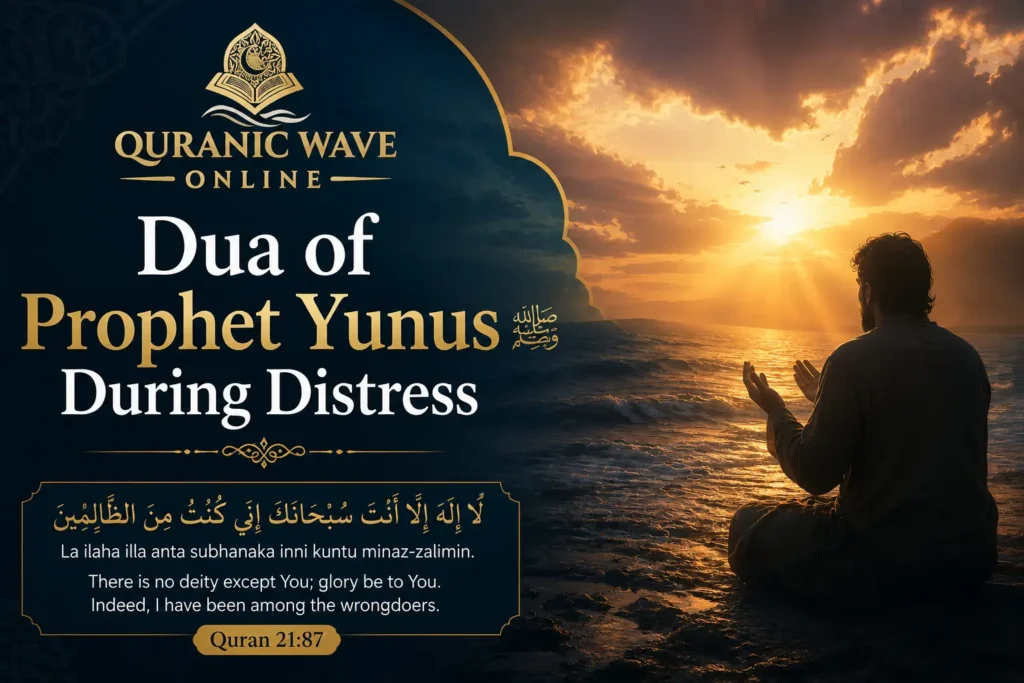
1. Dua of Prophet Yunus ﷺ During Distress
One of the most famous supplications for distress is the dua of Prophet Yunus (Jonah) ﷺ:
لَا إِلَٰهَ إِلَّا أَنْتَ سُبْحَانَكَ إِنِّي كُنْتُ مِنَ الظَّالِمِينَ
La ilaha illa anta subhanaka inni kuntu minaz-zalimin.
“There is no deity except You; glory be to You. Indeed, I have been among the wrongdoers.”
This is the supplication Prophet Yunus ﷺ made while he was in severe difficulty. Allah tells us that He answered him and saved him from distress.
The Quran says:
“So We responded to him and saved him from the distress. And thus do We save the believers.”
Look at the last wording of the verse: Allah saved Prophet Yunus ﷺ from his distress and promises to save the believers in the same way.
I find this to be an incredible door of hope for all Muslims around the world facing any anxiety or distress who want a way out. When you call upon Allah with this great verse, Insha’Allah you will get relief and ease. Quran 21:88
2. Dua for Protection From Worry and Grief
اللَّهُمَّ إِنِّي أَعُوذُ بِكَ مِنَ الهَمِّ وَالْحَزَنِ، وَأَعُوذُ بِكَ مِنَ الْعَجْزِ وَالْكَسَلِ،
وَأَعُوذُ بِكَ مِنَ الْجُبْنِ وَالْبُخْلِ، وَأَعُوذُ بِكَ مِنْ غَلَبَةِ الدَّيْنِ وَقَهْرِ الرِّجَالِ
Allahumma inni a’udhu bika minal-hammi wal-hazan, wa a’udhu bika minal-‘ajzi wal-kasal, wa a’udhu bika minal-jubni wal-bukhl, wa a’udhu bika min ghalabatid-dayni wa qahrir-rijal.
“O Allah, I seek refuge in You from worry and grief, from incapacity and laziness, from cowardice and miserliness, and from the burden of debt and being overcome by people.”
Source: Sahih al-Bukhari.
This dua is especially comprehensive because it addresses several forms of hardship rather than focusing on one problem.
When Can You Recite This Dua?
You can make this supplication whenever you are dealing with:
- Persistent worry
- Sadness or grief
- Feeling incapable of handling responsibilities
- Financial pressure
- Debt
- Fear of people
- Emotional exhaustion
- A difficult personal situation
It can be included in your daily adhkar and personal supplication.
3. Dua for Ease in a Difficult Situation
When something feels difficult, a believer can ask Allah directly for ease and guidance.
اللَّهُمَّ لَا سَهْلَ إِلَّا مَا جَعَلْتَهُ سَهْلًا، وَأَنْتَ تَجْعَلُ الْحَزْنَ إِذَا شِئْتَ سَهْلًا
Allahumma la sahla illa ma ja’altahu sahlan, wa anta taj’alul-hazna idha shi’ta sahlan.
“O Allah, there is no ease except what You make easy, and You can make difficulty easy if You will.”
This supplication reflects an important Islamic principle: ease ultimately comes from Allah.
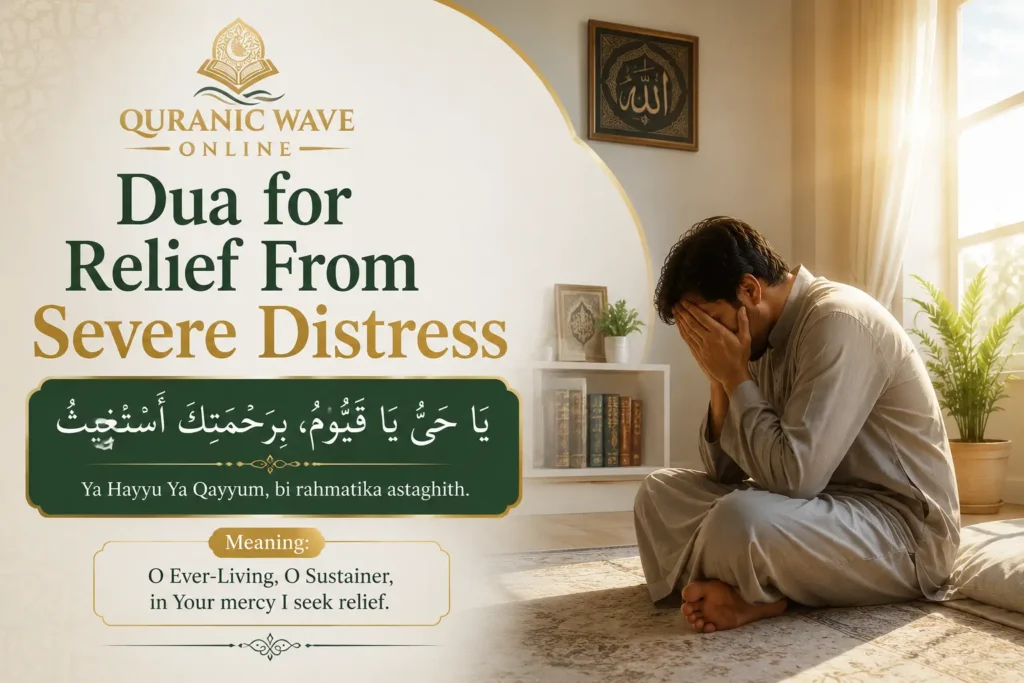
4. Dua for Relief From Severe Distress
The Prophet ﷺ also taught a supplication containing the words:
يَا حَيُّ يَا قَيُّومُ، بِرَحْمَتِكَ أَسْتَغِيثُ
Ya Hayyu Ya Qayyum, bi rahmatika astaghith.
“O Ever-Living, O Sustainer, in Your mercy I seek relief.”
This is a concise supplication that expresses complete dependence upon Allah’s mercy.
When your thoughts are racing and you cannot find many words, a short dua like this can help you turn your attention back toward Allah.
5. Dua From the Quran for Patience and Strength
When hardship continues for a long time, patience becomes especially important. The Quran records the supplication of believers:
رَبَّنَا أَفْرِغْ عَلَيْنَا صَبْرًا وَتَوَفَّنَا مُسْلِمِينَ
Rabbana afrigh ‘alayna sabran wa tawaffana muslimin.
“Our Lord, pour upon us patience and let us die as Muslims in submission to You.”
Quran 7:126
Rather than asking only for the problem to disappear, this dua asks Allah to provide the strength needed to remain steadfast through the difficulty.
If anxiety is severe, persistent, or interfering significantly with daily life, seeking qualified professional support is also an appropriate practical step. Seeking help does not contradict tawakkul.

6. Dua Invoking Allah’s Greatest Name (Ism al-A’zam)
اللَّهُمَّ إِنِّي أَسْأَلُكَ بِأَنَّ لَكَ الْحَمْدَ لَا إِلَهَ إِلَّا أَنْتَ الْمَنَّانُ بَدِيعُ السَّمَاوَاتِ وَالأَرْضِ يَا ذَا الْجَلَالِ وَالإِكْرَامِ يَا حَيُّ يَا قَيُّومُ
Allahumma inni as’aluka bi-anna lakal-hamd, la ilaha illa anta al-Mannan, Badi’us-samawati wal-ard, ya Dhal-Jalali wal-Ikram, ya Hayyu ya Qayyum.
“O Allah, I ask You by virtue of the fact that all praise is due to You; there is no deity worthy of worship except You, the Bestower of all good, the Originator of the heavens and the earth, O Possessor of Majesty and Honor, O Ever-Living, O Sustainer of all existence.”
7. Dua for Emotional Relief and Removing Sadness
اللَّهُمَّ إِنِّي عَبْدُكَ، وَابْنُ عَبْدِكَ، وَابْنُ أَمَتِكَ، نَاصِيَتِي بِيَدِكَ، مَاضٍ فِيَّ حُكْمُكَ، عَدْلٌ فِيَّ قَضَاؤُكَ، أَسْأَلُكَ بِكُلِّ اسْمٍ هُوَ لَكَ، سَمَّيْتَ بِهِ نَفْسَكَ، أَوْ أَنْزَلْتَهُ فِي كِتَابِكَ، أَوْ عَلَّمْتَهُ أَحَدًا مِنْ خَلْقِكَ، أَوْ اسْتَأْثَرْتَ بِهِ فِي عِلْمِ الْغَيْبِ عِنْدَكَ، أَنْ تَجْعَلَ الْقُرْآنَ رَبِيعَ قَلْبِي، وَنُورَ صَدْرِي، وَجَلاَءَ حُزْنِي، وَذَهَابَ هَمِّي
Allahumma inni ‘abduka, wabnu ‘abdika, wabnu amatika, nasiyati biyadika, madin fiyya hukmuka, ‘adlun fiyya qada’uka, as’aluka bikulli ismin huwa laka, sammayta bihi nafsaka, aw anzaltahu fi kitabika, aw ‘allamtahu ahadan min khalqika, aw ista’tharta bihi fi ‘ilmil-ghaybi ‘indaka, an taj’alal-Qur’ana rabi’a qalbi, wa nura sadri, wa jala’a huzni, wa dhahaba hammi.
“O Allah, I am Your slave, the son of Your slave, the son of Your female slave. My forelock is in Your hand, Your judgment upon me is assured, and Your decree concerning me is just. I ask You by every name that belongs to You, with which You have named Yourself, revealed in Your Book, taught to any of Your creation, or preserved in the knowledge of the unseen with You, that You make the Quran the spring of my heart, the light of my chest, the banisher of my sadness, and the reliever of my anxiety.”
The Prophet ﷺ mentioned that whoever recites this dua when afflicted by anxiety or grief, Allah will remove their distress and replace their sorrow with joy.
8. Dua When Facing Calamity and Loss
إِنَّا لِلَّهِ وَإِنَّا إِلَيْهِ رَاجِعُونَ، اللَّهُمَّ أْجُرْنِي فِي مُصِيبَتِي وَأَخْلِفْ لِي خَيْرًا مِنْهَا
Inna lillahi wa inna ilayhi raji’un. Allahumma’-jurni fi musibati wa akhlif li khayran minha.
“Indeed, to Allah we belong and to Him we shall return. O Allah, reward me in my affliction and replace it for me with something better.”
Ummu Salamah (RA) reported that the Prophet ﷺ said: “No servant is afflicted with a calamity and says this dua except that Allah rewards him in his calamity and grants him something better in return.”
How to Make Dua During Hardship
There is no requirement that you use only one particular supplication every time you experience difficulty. You can recite authentic duas and then speak to Allah sincerely about what you are going through.
Best Times to Make Dua
A believer can make dua at any time, but certain times have special significance in the Sunnah.
| Time | What You Can Do |
|---|---|
| During sujood | Make sincere supplication |
| Before salam in Salah | Ask Allah for what you need |
| Last third of the night | Salatul-Hajat and make dua |
| Between adhan and iqamah | Make supplication |
| During rainfall | Make dua |
| On Friday | Increase dua and remembrance |
These opportunities should not make a person neglect dua at other times. Allah can be called upon whenever a person needs Him.
What Should You Avoid When Making Dua?
When facing hardship, emotional pressure can make a person impatient. Islam encourages a healthier approach.
Avoid:
- Assuming Allah has abandoned you
- Losing hope in Allah’s mercy
- Demanding an immediate answer
- Making unlawful requests
- Turning to superstitious practices
- Believing that one specific wording guarantees a particular worldly result
- Abandoning practical efforts
How to Stay Hopeful During Long-Term Hardship
Some difficulties do not disappear quickly. In those situations, maintaining faith can itself become a test of patience.
Try to focus on what you can control:
- Continue your obligatory worship.
- Make regular dua, even when you feel emotionally tired.
- Break large problems into manageable steps.
- Seek advice from trustworthy people.
- Keep your expectations of Allah positive.
- Remember previous blessings instead of focusing only on what is missing.
- Avoid isolating yourself when support is needed.
- Give yourself time to recover from difficult experiences.
Can I Make Dua in My Own Language?
Yes. When making personal supplication outside the formal Arabic recitations of Salah, you can ask Allah in the language you understand.
You can say something as simple as:
“Ya Allah, You know what I am going through. Please remove this hardship, calm my heart, guide me toward what is best, and give me the strength to remain patient.”
Frequently Asked Questions
What is the best Dua for hardship and distress?
The dua of Prophet Yunus ﷺ:
“La ilaha illa anta subhanaka inni kuntu minaz-zalimin.”
What should I keep in mind while making dua during distress?
Approach Allah with complete trust (tawakkul), avoid desperation or expecting immediate results, and combine your prayers with practical effort and patience.
What should I read when I am stressed?
You can recite authentic duas from the Quran and Sunnah, make dhikr, pray Salah, and ask Allah for relief in your own words.
How often should I make dua for hardship?
You may make dua whenever you need Allah’s help. There is no need to restrict sincere personal supplication to one specific number unless an authentic source specifies a particular number.
Does dua remove hardship immediately?
Not always. Allah answers every dua in His perfect timing and way—whether by granting immediate relief, removing harm, or storing a greater reward for the hereafter. Continue praying with patience and taking practical steps.
Can I make dua for emotional distress?
Yes. You can ask Allah for comfort, patience, strength, guidance, protection, and relief from emotional distress. You can also seek appropriate professional or personal support when needed.
Final Thoughts
Hardship can make us feel helpless, but Islam reminds us where to turn when life becomes difficult: to Allah.
I encourage you to keep these authentic duas close to your heart and recite them with deep understanding. Continue your Salah, make sincere supplication, and place your full trust in Allah. If you are struggling today, turn to Him honestly—even a simple “Ya Allah, help me” can ease your heavy heart.
May Allah relieve your burdens, grant you peace, and open doors of goodness for you. Ameen.